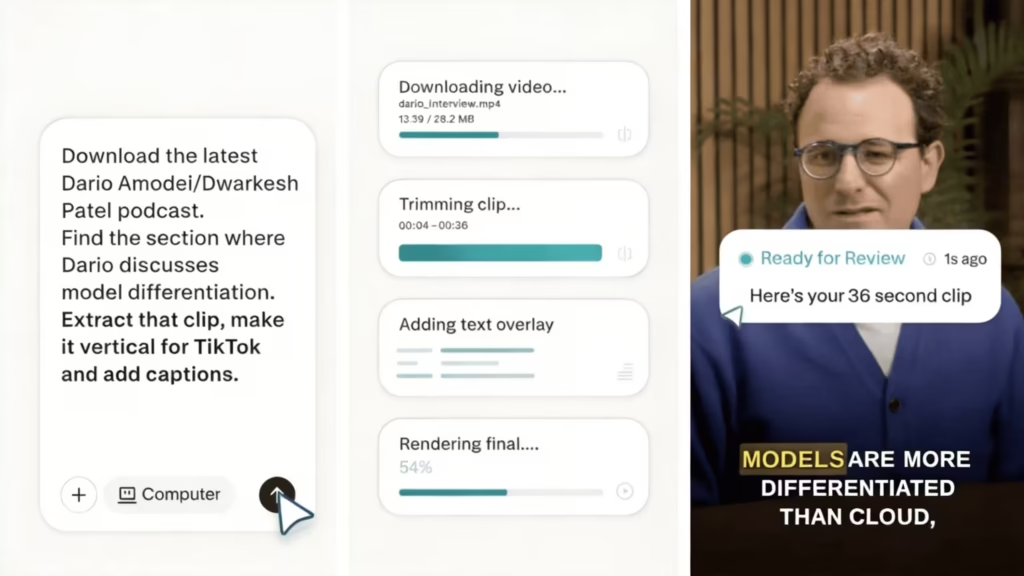
AI Takes Center Stage at Davos 2026 🌎

The world’s elite are panicked about AI in the Alps. The World Economic Forum (WEF) kicked off in Davos this week, and the conversation is dominated by one topic: the accelerating pace of Artificial Intelligence.
Top leaders dropped some serious predictions:
- The Coding Countdown: Anthropic CEO Dario Amodei predicted we may be just 6-12 months away from AI models that can do “most, maybe all” of what a human software engineer does.
- Geopolitical Fire: Amodei also criticized recent U.S. policies allowing AI chip sales to China, controversially likening it to “selling nuclear weapons to North Korea.”
- Adapt or Die: Microsoft CEO Satya Nadella warned that no company can “just coast” anymore. He argued that incumbents who don’t integrate AI quickly will “get schooled by someone small.”
- The Workforce Shift: Google DeepMind’s Demis Hassabis noted that while junior hiring might slow down this year, AI tools will eventually create new types of skilled roles.
Why it matters: The timeline for disruption is shrinking. When the CEO of a leading AI lab says human-level coding is less than a year away, it puts every business leader on notice. The consensus at Davos is that 2026 is the year AI moves from “experiment” to “replacement” for many technical tasks.
UrviumAI Take: Amodei’s “6-12 months” comment is the most aggressive timeline we’ve seen yet. If you work in software, stop coding “from scratch.” Shift your focus to system architecture and product management. If the AI writes the code, your value lies in deciding what to build and how it fits together.
OpenAI Confirms First Device Coming in 2026 with Jony Ive📱
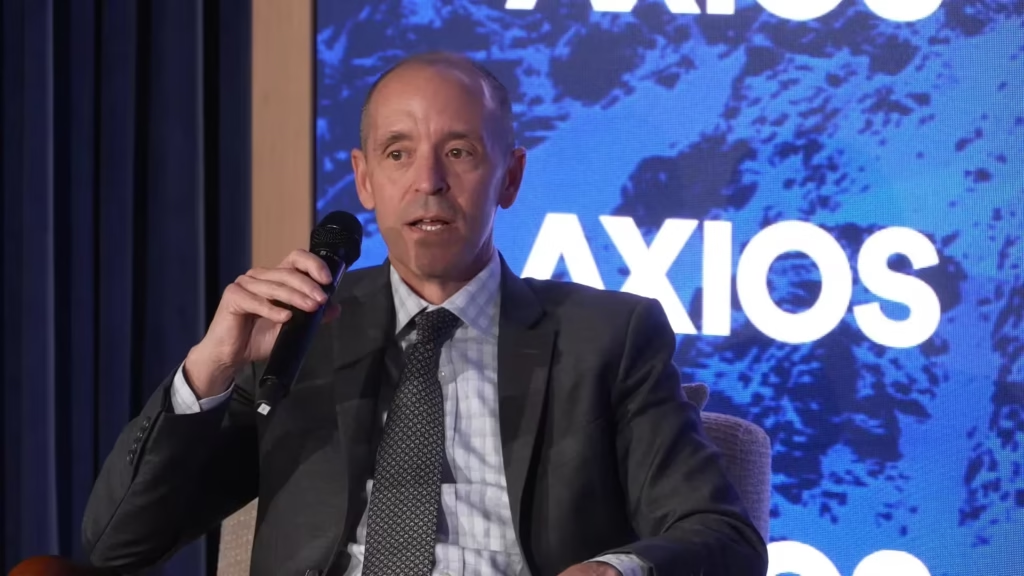
The “iPhone of AI” is officially on the schedule. OpenAI has confirmed that it is “on track” to unveil its first-ever hardware device in the second half of 2026. As per Axios.
Here is what we know about the mystery gadget:
- The Confirmation: Chief Global Affairs Officer Chris Lehane broke the news at Axios House in Davos, stating the company plans to reveal the device “much later in the year.”
- The Design Team: The device is being built in collaboration with legendary designer Jony Ive (the man behind the iPhone and iPod) following OpenAI’s acquisition of his studio.
- What is it? While specific details are secret, reports describe it as a screen-less, possibly wearable device focused on voice interaction.
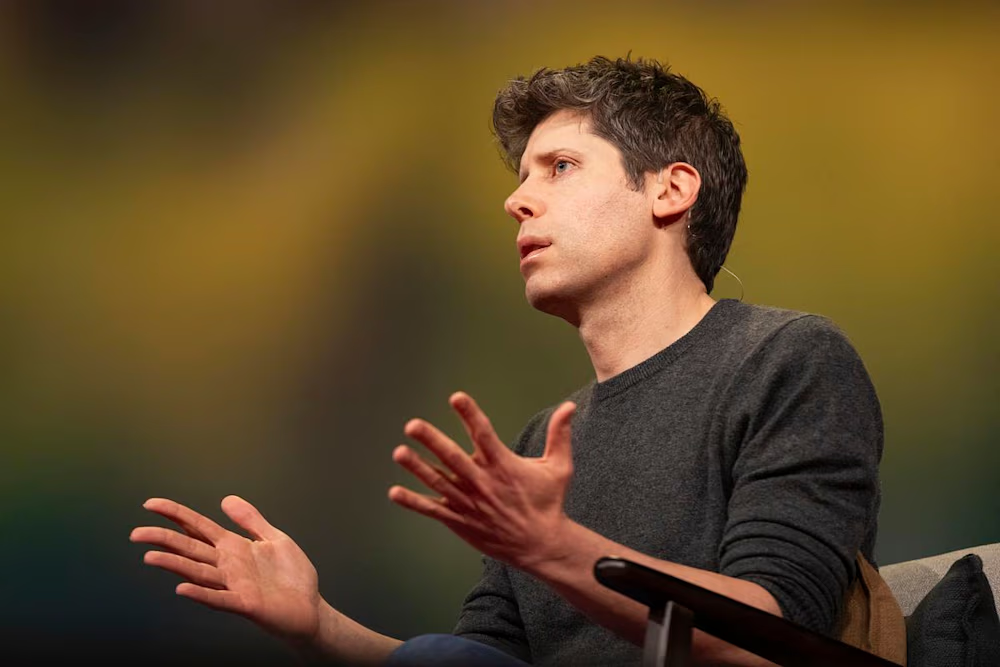
- The Goal: CEO Sam Altman has previously described it as something “more peaceful” than a smartphone—a device that helps you engage with the world rather than distracting you from it.
Why it matters: OpenAI isn’t content with just being a chatbot on your phone. By building its own hardware, it aims to bypass Apple and Google to create a direct, always-on connection with users. If Jony Ive can do for AI what he did for the smartphone, this could be the next major shift in consumer technology.
UrviumAI Take: A “screen-less” device is a massive design risk. Pay attention to how this device handles context. If it has cameras/microphones to “see” and “hear” what you do (like the failed Humane Pin), privacy will be the biggest hurdle. OpenAI will need to convince us that an always-listening ChatGPT is a helper, not a spy.
OpenAI Rolls Out Age Prediction to Protect Teens 🛡️
ChatGPT is trying to guess how old you are. In a major safety update, OpenAI is rolling out a new “Age Prediction“ model for ChatGPT consumer plans. The goal is to identify users who are likely under 18—even if they lied about their age—to ensure they have the right protections.
Here is how the system works:
- Behavioral Scanning: The AI analyzes signals like “what time of day you use the app,” “how long the account has existed,” and “typing patterns” to estimate age.
- Automatic Safeguards: If the model flags an account as a minor, it automatically restricts access to sensitive content, including graphic violence, sexual roleplay, and self-harm depictions.
- The “Default to Safety”: When the system isn’t sure, it defaults to the safer, restricted experience.
- Recourse: If an adult is incorrectly flagged as a teen, they can restore full access by verifying their identity via a selfie using Persona.
Why it matters: As AI becomes a staple for students, safety is becoming a massive liability. By proactively scanning for minors, OpenAI is trying to get ahead of regulation (and lawsuits) by proving it can enforce age limits without requiring every single user to upload an ID card.
UrviumAI Take: This “behavioral prediction” is a privacy slippery slope. Be aware that your “usage patterns” are now being analyzed for identity verification. If you share a family account, your child’s usage might trigger restrictions for you. It might be time to get separate accounts for everyone in the house.
Last AI News: Claude Code Rattles Software Stocks, Korea’s AI “Squid Game,” Gartner’s $2.5T Forecast

Jigar Chaudhary is the Editor-in-Chief at UrviumAI, where he oversees coverage of artificial intelligence news, tools, and in-depth studies. With over 5 years of experience analyzing AI and robotics, he focuses on maintaining high editorial standards, accurate reporting, and clear explanations to help readers understand how AI is shaping the future.