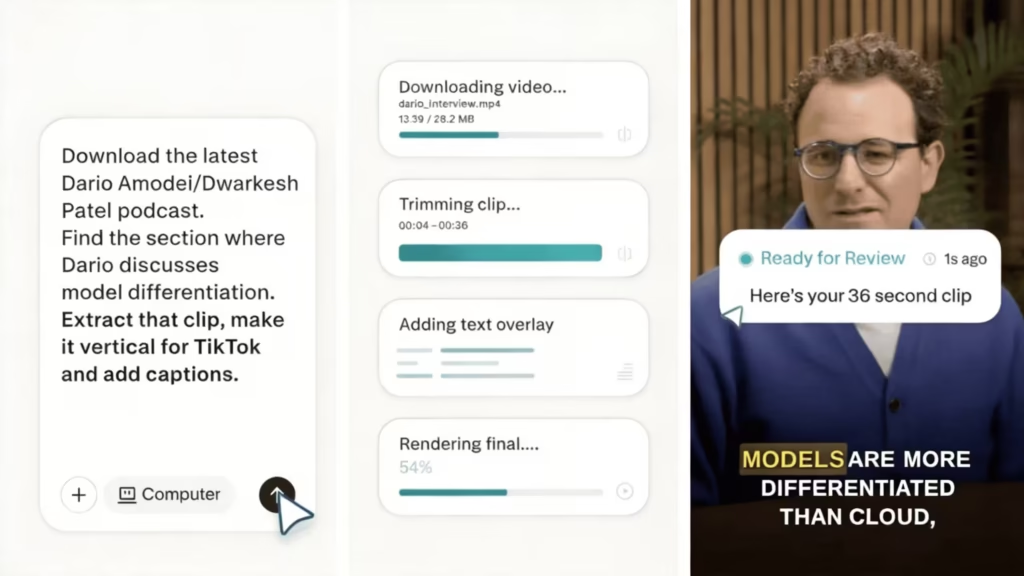
Anthropic Blocks xAI from Using Claude 🚫

The AI cold war just got physical. Anthropic has reportedly cut off xAI’s access to its Claude models, blocking Elon Musk’s engineering team from using the rival AI to speed up their own coding workflows.
Here is the breakdown of the blockade:
- The Discovery: xAI engineers using the popular Cursor code editor found they could no longer access Claude. Co-founder Tony Wu confirmed in an internal memo that this was a deliberate ban by Anthropic.
- The Reason: Anthropic’s terms of service explicitly forbid using its models to train or develop competing AI systems. xAI’s use of Claude to build Grok and other tools was a direct violation.
- The Reaction: Wu admitted the move would cause a short-term “hit on productivity” but framed it as motivation for xAI to accelerate the development of its own coding models. Meanwhile, X executives publicly vented, with some suggesting a retaliatory ban on Anthropic.
- Pattern of Behavior: This isn’t the first time Anthropic has pulled the plug. They previously revoked OpenAI’s API access and limited tools like Windsurf, signaling a stricter enforcement of their “no competitors” policy.
Why it matters: This incident reveals a dirty secret of the AI industry: even top labs rely on their rivals’ models to code faster. Anthropic closing the door forces xAI to become truly self-reliant, potentially slowing them down in the short term but driving more aggressive competition in the long run.
UrviumAI Take: This proves Claude is currently the “developer’s choice” for coding. If you are a developer, this is a strong signal to keep using Cursor with Claude 3.5 Sonnet. If it’s good enough for Elon Musk’s engineers to “rely on,” it’s definitely the best tool for your personal projects.
Microsoft Report: US Lags in AI Adoption While DeepSeek Rises 📊
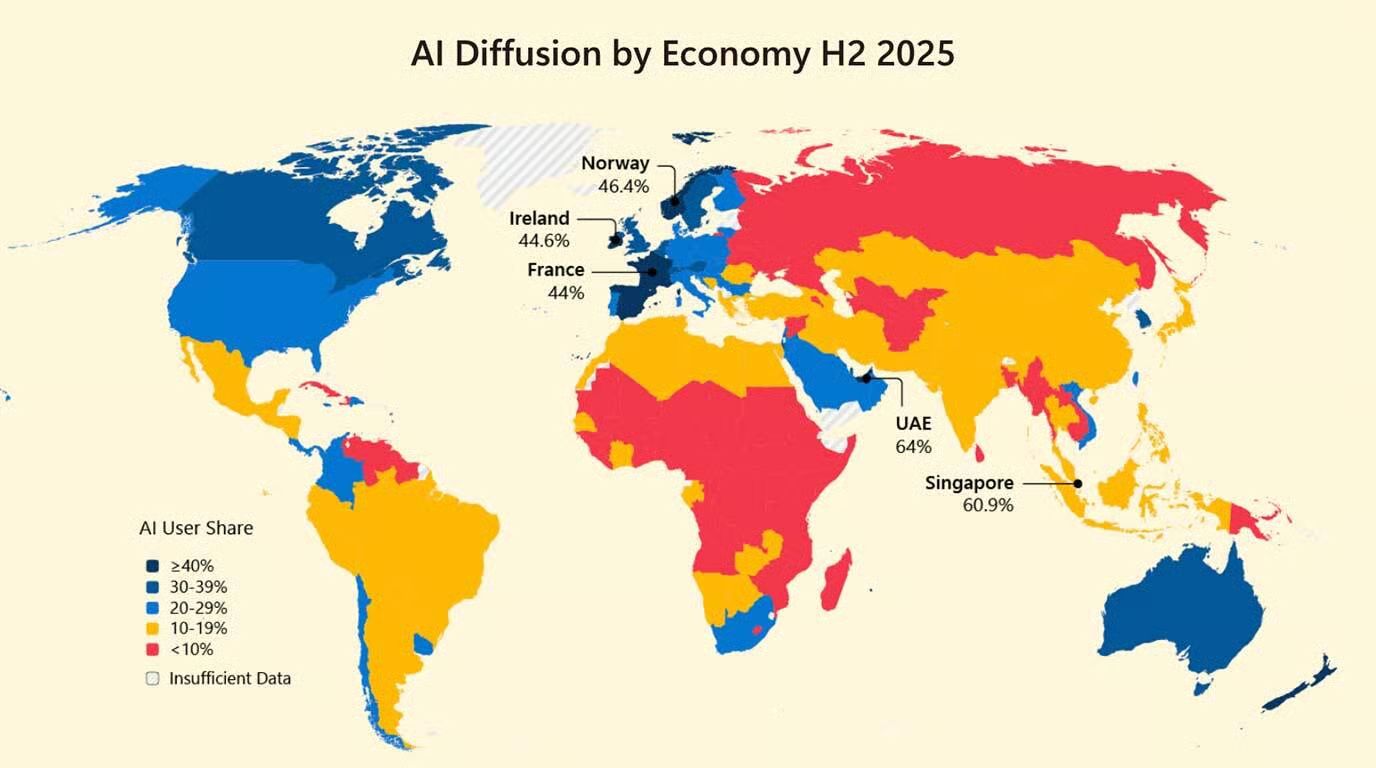
The U.S. builds the AI, but the world uses it. A surprising new report from the Microsoft AI Economy Institute reveals a widening gap in global AI adoption. While the U.S. is the undisputed leader in creating AI technology, it has fallen to 24th place in actually using it within the workforce.
Here are the key findings from late 2025:
- Global Leaders: The UAE ranks #1 with 64% of its working population using AI, followed by Singapore. The U.S. lags behind at just 28.3%.
- The Divide: There is a stark “digital divide.” Developed nations (Global North) are adopting AI nearly twice as fast as developing economies (Global South), widening the productivity gap.
- The DeepSeek Effect: In underserved markets like Africa, the Chinese open-source model DeepSeek is exploding in popularity. Its free access and relaxed hardware requirements are helping it gain 2-4x higher usage than Western rivals in some regions.
- Innovation vs. Adoption: The data proves that having the best labs (OpenAI, Google, Anthropic) doesn’t guarantee a population that knows how to use the tools effectively.
Why it matters: “Diffusion” is just as important as “Discovery.” If the U.S. and Europe don’t focus on training their workforces, they risk becoming the factories that build the engines for everyone else’s economic growth. Meanwhile, China’s DeepSeek is quietly winning the hearts and minds of the developing world through accessibility.
UrviumAI Take: The DeepSeek data is a geopolitical signal. If you are building for global markets, test your prompts on DeepSeek. Ignoring this model means ignoring a huge chunk of users in Africa and Asia who may rely on it over ChatGPT due to cost and access.
Anthropic Launches “Claude for Healthcare” 🏥
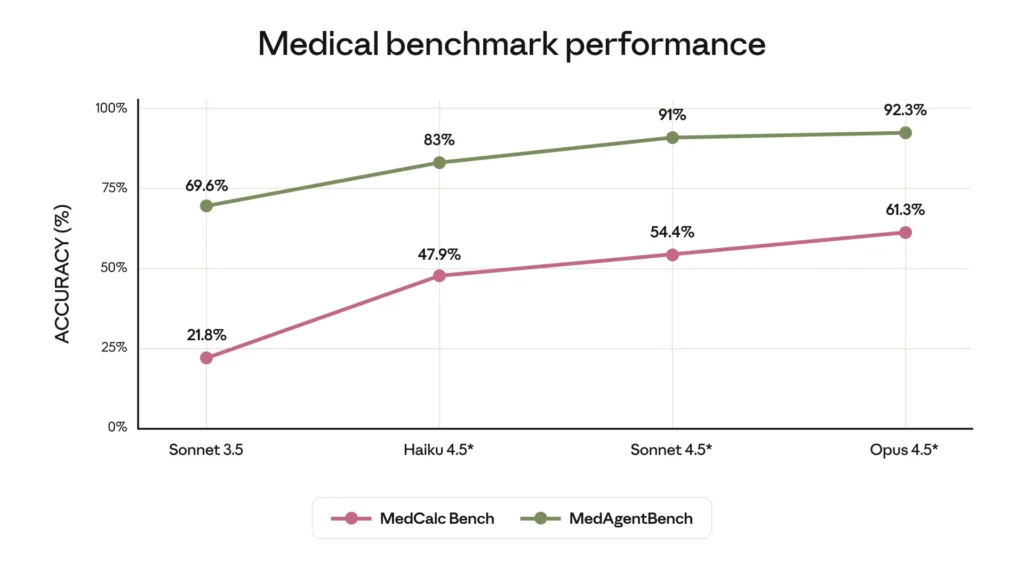
Anthropic is officially entering the doctor’s office. Just days after OpenAI’s health push, Anthropic has launched “Claude for Healthcare,” a powerful suite of tools designed to integrate its AI directly into medical workflows for providers, insurers, and patients.
Here is what the new platform enables:
- Clinical Connectors: Claude can now plug directly into industry-standard databases like CMS Coverage (for insurance rules), ICD-10 (for medical coding), and PubMed (for research). This allows it to verify insurance claims and summarize complex medical studies instantly.
- Patient Power: For consumers, Anthropic launched integrations with HealthEx, Apple Health, and Android Health Connect. Users can securely upload lab results or fitness data and ask Claude to “explain this blood test in plain English.”
- HIPAA-Ready: The system is built for privacy, allowing secure handling of sensitive patient data (PHI) for enterprise customers.
- Life Sciences Expansion: New tools for clinical trial management allow researchers to draft protocols and track enrollment data via platforms like Medidata.
Why it matters: This is a direct counter to ChatGPT Health. While OpenAI is focusing on a consumer-friendly “health assistant,” Anthropic is targeting the infrastructure of healthcare—helping hospitals and insurers automate the heavy administrative lifting of billing, coding, and prior authorizations.
UrviumAI Take: Connecting to the CMS Coverage Database is a boring but massive feature. If you work in medical billing or admin, this is your killer app. Claude can now check a patient’s record against federal coverage rules in seconds, potentially saving hours of manual cross-referencing for insurance claims.
Last AI News: Apple Partners with Google Gemini, Grok Banned in Asia, & Dassault’s AI Defense Bet

Jigar Chaudhary is the Editor-in-Chief at UrviumAI, where he oversees coverage of artificial intelligence news, tools, and in-depth studies. With over 5 years of experience analyzing AI and robotics, he focuses on maintaining high editorial standards, accurate reporting, and clear explanations to help readers understand how AI is shaping the future.