
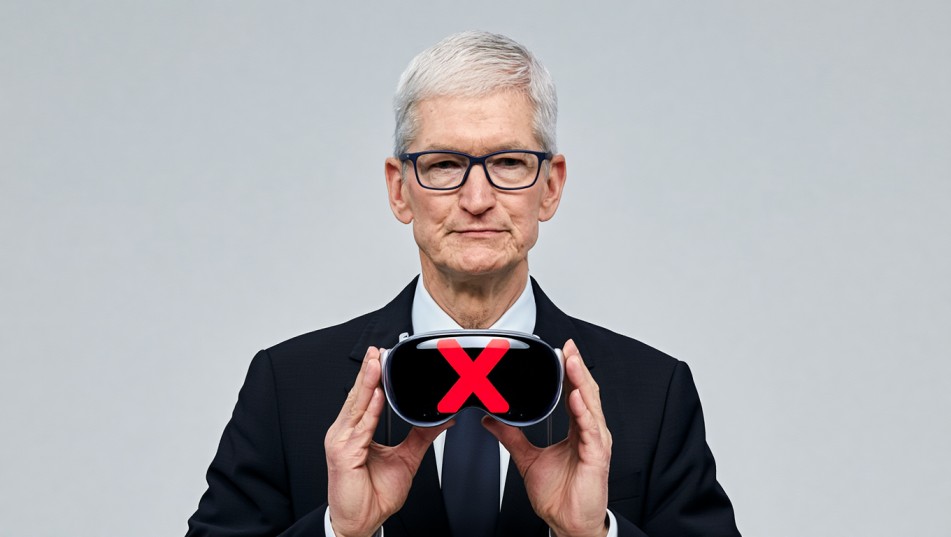
Apple’s $3,500 Vision Pro experiment lasted exactly long enough for everyone to realize nobody wants a face computer. Now Bloomberg reports Apple canceled plans to improve it and instead decided to chase Meta’s successful Ray-Ban smart glasses strategy. Turns out the future of wearables isn’t bulky headsets—it’s glasses that don’t make you look like a cyborg.
What Actually Happened
Apple pulled the plug on a lighter, cheaper Vision Pro variant planned for 2027, reassigning those teams to fast-track multiple smart glasses designs. One version launches in 2027 as an iPhone accessory without its own screen, while another with an integrated display aims to compete directly with Meta’s Display glasses. The devices will rely heavily on voice controls, AI features, cameras, speakers, and health tracking—all powered by the upcoming Siri upgrade that better actually work this time.
What Makes This Strategic Retreat Special
- Vision Pro Abandonment: Halted work on improved Vision Pro variant, essentially admitting the platform failed to find product-market fit
- Meta Copycat Strategy: Pivoting to Ray-Ban-style glasses after Meta proved the market exists with successful launches
- iPhone Dependency: First version connects to iPhone without own display—keeping costs down and leveraging existing ecosystem
- Dual Product Approach: Simpler iPhone-connected version for 2027, more advanced display-equipped model following after
- Siri Integration Critical: Success depends entirely on whether March 2026 Siri AI overhaul delivers on promises
Why Apple’s Wearable Pivot Actually Matters
This represents one of Apple’s most public product failures in years. Vision Pro’s high price ($3,500), heavy design, and lack of compelling use cases turned it into a tech curiosity rather than a mainstream product. Meanwhile, Meta quietly won the smart glasses race by making devices people actually want to wear. Apple’s pivot shows even tech giants can’t force consumers to adopt uncomfortable technology just because it’s technically impressive.
The Future Impact We’re Looking At
2027: Apple launches first smart glasses as iPhone accessories. If Siri’s AI upgrade worked, these become the AirPods success story 2.0. If Siri still struggles, they become another failed wearable.
2027-2028: Display-equipped version launches, competing directly with Meta’s advanced glasses. Apple’s ecosystem lock-in could give them an edge if the hardware delivers.
2028-2030: Smart glasses become mainstream as both Apple and Meta iterate. Traditional sunglasses brands either partner with tech companies or risk irrelevance.
Long-term Vision: Glasses replace smartphones as primary computing interface—but only if AI assistants become reliable enough to handle complex tasks through voice and gesture controls.
The Bottom Line
Apple just learned an expensive lesson: consumers want wearables that enhance their lives without announcing they’re wearing technology. Vision Pro tried to replace reality; smart glasses augment it. By copying Meta’s approach, Apple might finally crack the wearables market—assuming Siri doesn’t let them down again.
Want the Technical Details?
Vision Pro Status: Lighter, cheaper variant canceled
Smart Glasses Timeline: 2027 initial release
First Version: iPhone-connected, no integrated display
Advanced Version: Integrated display competing with Meta Display glasses
Key Features: Voice controls, AI features, cameras, speakers, health tracking
AI Dependency: Relies on March 2026 Siri upgrade success
Competitive Target: Meta Ray-Ban lineup and Display glasses
Meta’s Advantage: Already shipped Display glasses, Neural Band, Oakley variants, Ray-Ban Gen 2
Strategic Shift: From standalone AR headset platform to AI-powered accessory ecosystem leveraging iPhone integration.
Read more about “ChatGPT Just Became Your Personal Shopping Mall (And OpenAI Gets Paid Every Time) 🤑“

Jigar Chaudhary is the Editor-in-Chief at UrviumAI, where he oversees coverage of artificial intelligence news, tools, and in-depth studies. With over 5 years of experience analyzing AI and robotics, he focuses on maintaining high editorial standards, accurate reporting, and clear explanations to help readers understand how AI is shaping the future.


Pingback: OpenAI Became the World's Most Valuable Private Company