
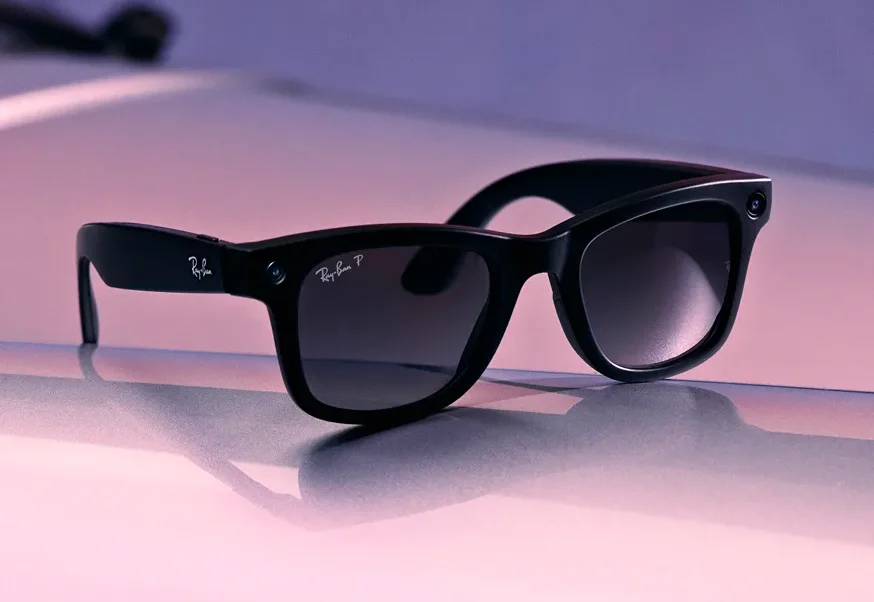
You know that moment when you think about reaching for your phone and somehow it’s already in your hand? Well, Meta just created smart glasses that can literally detect what you’re about to do before your muscles even start moving. At Meta Connect, they unveiled the Neural Band – a wearable that reads electrical muscle signals and turns subtle finger twitches into digital commands. Welcome to the age of mind-controlled fashion.
What Actually Happened
Meta dropped three game-changing smart glasses at Meta Connect, but the real showstopper is the Neural Band paired with Ray-Ban Display glasses. This isn’t your typical “Hey Meta, take a photo” voice command situation – this system can detect the electrical signals your brain sends to your muscles before you visibly move, turning nearly imperceptible finger movements into interface controls. It’s like having telepathic powers, except it’s just really sophisticated muscle signal detection.
What Makes This Neural Revolution Special
- Pre-Movement Detection: Neural Band detects electrical muscle signals before visible movement occurs – controlling tech with pure intention
- Invisible Interface Control: Navigate, message, and interact through subtle finger movements that are nearly imperceptible to others
- Personalized Learning: The system learns and adapts to each user’s unique neural patterns, making control more intuitive over time
- Ray-Ban Gen 2 Upgrades: Doubled battery life to 8 hours, 3K Ultra HD video recording, and conversation focus for noisy environments
- Oakley Athletic Integration: 9-hour battery life, water resistance, and real-time Garmin connectivity for performance metrics
Why This Mind-Reading Wearable Actually Matters
Meta just solved the two biggest problems that have killed every previous attempt at smart glasses: making them stylish enough that people actually want to wear them, and creating controls that don’t require awkward voice commands in public. The Neural Band represents a fundamental shift from touch-based interfaces to intention-based interfaces – we’re moving from telling our devices what to do to them sensing what we want to do.
The Future Impact We’re Looking At
Next 6 Months: Early adopters will begin testing Neural Band integration with Ray-Ban Display glasses. Expect viral videos of people controlling their glasses with tiny finger movements that look like magic to observers.
1 Year: The technology expands beyond glasses to other wearables – smartwatches, fitness trackers, and potentially even smartphones that respond to muscle signal intention rather than touch.
2-3 Years: Neural interfaces become mainstream for accessibility applications, helping people with mobility limitations control devices through subtle muscle signals they can still generate.
3-5 Years: The line between thinking and doing begins to blur as neural interfaces become so sensitive they can detect intention at the moment of neural firing, before any muscle signal occurs.
Long-term Vision: We’re witnessing the birth of truly seamless human-computer interfaces where technology responds to our intentions rather than our actions. The future won’t be about learning to use technology – technology will learn to understand us.
The Bottom Line
Meta just turned smart glasses from a tech demo into a fashion statement with superpowers. By detecting what you want to do before you do it, the Neural Band represents the first step toward technology that truly understands human intention. The age of awkward voice commands is ending – the era of mind-controlled wearables has officially begun.
Want the Technical Details?
Neural Band Technology: Electrical muscle signal detection before visible movement
Ray-Ban Display Features: Subtle finger movement control, messaging, navigation
Ray-Ban Gen 2 Specs: 8-hour battery, 3K Ultra HD video, conversation focus
Oakley Vanguard Specs: 9-hour battery, water resistance, Garmin connectivity
Learning Capability: Personalizes to individual user neural patterns
Control Method: Pre-movement muscle signal detection vs voice commands
Launch Event: Meta Connect 2025
Interface Innovation: Intention-based control over traditional touch/voice
Applications: Messaging, navigation, camera control, fitness tracking, accessibility assistance through neural signal interpretation.
Read more about “Google Just Gave AI Agents Your Credit Card (And 60+ Companies Think It’s Brilliant) 💳“

Jigar Chaudhary is the Editor-in-Chief at UrviumAI, where he oversees coverage of artificial intelligence news, tools, and in-depth studies. With over 5 years of experience analyzing AI and robotics, he focuses on maintaining high editorial standards, accurate reporting, and clear explanations to help readers understand how AI is shaping the future.


Pingback: Google Just Turned Chrome Into the World's Most Powerful AI Browser (And Everyone Will Use It) 🌐 - UrviumAI