
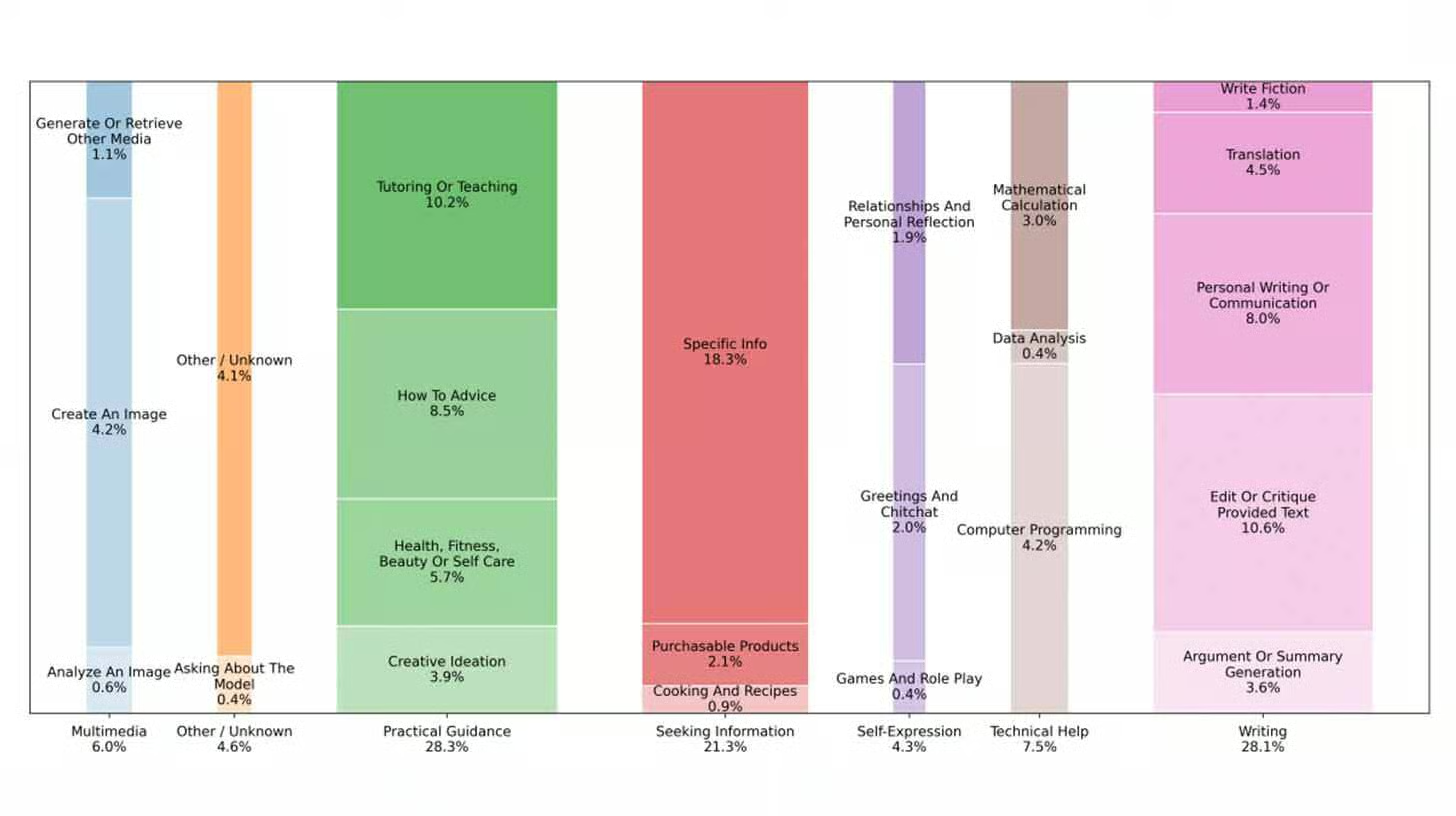
You know that moment when you realize you’ve been using your smartphone completely differently than everyone else? Well, OpenAI and Anthropic just dropped the ultimate AI usage report, and it turns out how people actually use ChatGPT and Claude is way more fascinating – and different – than anyone expected. Spoiler alert: we’re not all using AI the same way, and the divide is bigger than you think.
What Actually Happened
In a rare moment of transparency, both AI giants decided to pull back the curtain and show us exactly how millions of people are actually using their platforms. The results read like a sociological study of the AI age – revealing not just what we’re doing with AI, but who’s doing it, where they’re doing it, and how our relationship with these tools is evolving faster than anyone predicted.
What These AI Usage Revelations Show Us
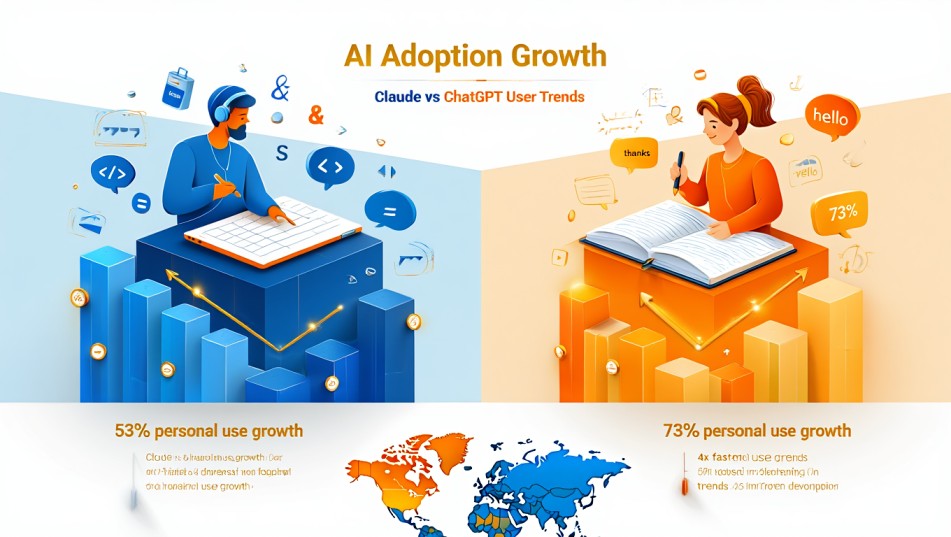
- Personal Use Explosion: ChatGPT personal use skyrocketed from 53% in June 2024 to 73% by 2025 – we’re treating AI more like a friend than a work tool
- Platform Personality Split: Claude users focus heavily on coding tasks, while ChatGPT users prefer writing and decision support – it’s like each AI has found its calling
- Global Digital Divide: AI adoption in low and middle-income countries is growing 4x faster for ChatGPT, while Claude usage concentrates in wealthy regions
- From Creation to Consultation: Both platforms show users increasingly seeking information and advice rather than asking AI to generate content – we’re becoming AI-powered researchers
- Task Delegation Evolution: People are delegating more complex, nuanced tasks over time rather than just simple content generation
Why This AI Behavior Study Actually Matters
This isn’t just data – it’s a mirror reflecting how humanity is adapting to artificial intelligence. The surge in personal use shows we’re not just automating work tasks; we’re integrating AI into our personal lives, decision-making, and even our thought processes. The geographic and demographic splits reveal that AI adoption isn’t happening equally across the world, creating new forms of digital inequality that could reshape global competitiveness.
The Future Impact We’re Looking At
Next 6 Months: The personal use trend will accelerate as AI becomes more conversational and emotionally intelligent. Expect AI therapy, relationship advice, and personal coaching to become mainstream applications.
1 Year: The coding vs writing divide will deepen, with Claude becoming the developer’s preferred tool while ChatGPT dominates creative and personal applications. Different AIs will own different use cases completely.
2-3 Years: The global digital divide will force policy interventions. Developing countries using AI 4x faster could leapfrog traditional technology adoption patterns, similar to how mobile payments bypassed credit cards in Africa.
3-5 Years: Personal AI use will fundamentally change human decision-making processes. We’ll see the emergence of “AI-assisted thinking” as normal, with people unable to make complex decisions without their AI companions.
Long-term Vision: We’re witnessing the birth of AI as a life companion rather than just a productivity tool. Different AIs will serve different aspects of human life, creating an ecosystem of specialized AI relationships that shape everything from career choices to personal growth.
The Bottom Line
OpenAI and Anthropic just showed us that the AI revolution isn’t happening the way anyone predicted. Instead of replacing human workers, AI is becoming our personal advisor, creative partner, and thinking companion. The data reveals we’re not just using AI – we’re forming relationships with it, and those relationships are reshaping human behavior in real time.
Want the Technical Details?
ChatGPT Personal Use Growth: 53% (June 2024) → 73% (2025)
Usage Pattern Split: Claude (coding focus) vs ChatGPT (writing/decision support)
Global Adoption Rate: 4x faster growth in low/middle-income countries (ChatGPT)
Geographic Concentration: Claude usage concentrated in wealthy regions
Behavioral Shift: Information seeking increasing over content generation
Task Complexity: Users delegating more nuanced tasks over time
Data Sources: OpenAI and Anthropic platform analytics
Demographic Insights: Personal vs business use patterns, geographic adoption differences, and evolving AI relationship dynamics across user populations.
Read more about “China Just Built an AI That Thinks Like a Human Brain (And It’s 100x Faster Than ChatGPT)“

Jigar Chaudhary is the Editor-in-Chief at UrviumAI, where he oversees coverage of artificial intelligence news, tools, and in-depth studies. With over 5 years of experience analyzing AI and robotics, he focuses on maintaining high editorial standards, accurate reporting, and clear explanations to help readers understand how AI is shaping the future.

Pingback: Google Just Gave AI Agents Your Credit Card (And It's Brilliant)