OpenAI’s Corporate Overhaul & Revised Microsoft Terms
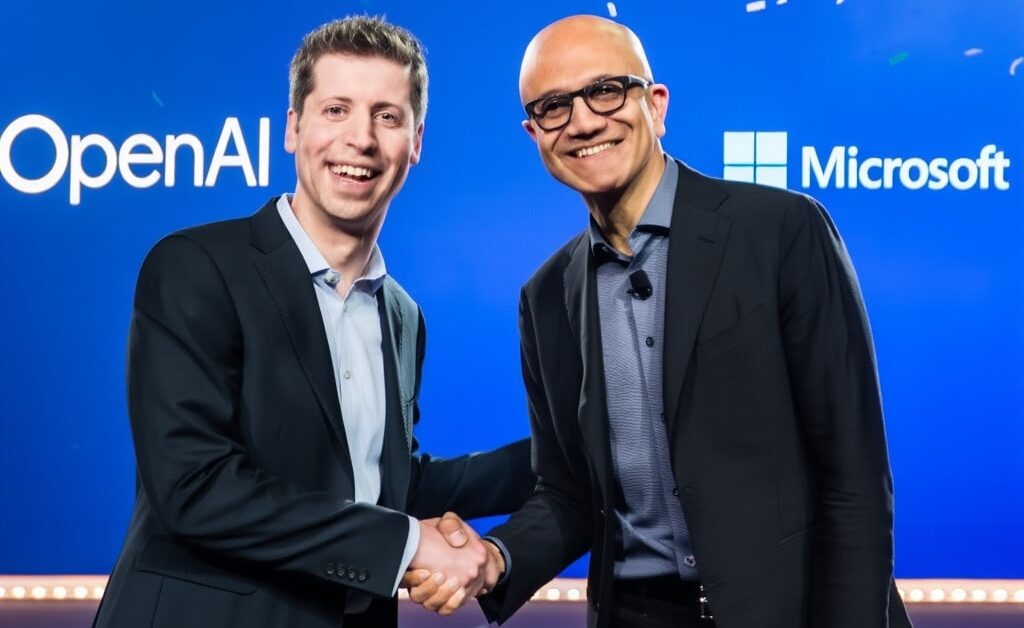
OpenAI just completed its controversial transition to a public benefit corporation, while also simultaneously renegotiating its Microsoft arrangement to address tensions surrounding AGI rights and ownership stakes—and the numbers are staggering.
The details:
- The original nonprofit, rebranded as OpenAI Foundation, now holds $130B of equity and will direct $25B to health research and \”AI resilience infrastructure”
- Microsoft’s ownership drops from 32.5% to around 27% in the new entity, though its stake is now worth approximately $135B following recent funding
- An independent expert panel will verify any AGI claims going forward, with Microsoft now retaining tech rights through 2032 even after AGI arrives
- Microsoft and OpenAI can now pursue AGI with other partners; while OpenAI is committed to $250B in Azure purchases, it can shop for compute elsewhere
Why it matters: OpenAI’s restructuring has been the messiest corporate transformation in AI history—legal battles, board drama, Sam Altman\’s firing-and-rehiring saga, and endless scrutiny over whether a “nonprofit” controlling a $157B company made any sense. Now it’s finally done, and OpenAI is calling the Foundation “one of the best-resourced philanthropic organizations ever’ with $130B in equity.
That’s not hyperbole—it dwarfs most traditional foundations. The Microsoft renegotiation is equally significant. Dropping from 32.5% to 27% ownership sounds like a loss, but Microsoft’s stake is now worth $135B (up from roughly $13B invested), so they’re hardly crying. The real win for Microsoft: AGI tech rights through 2032 regardless of when AGI arrives, ending the ambiguity that’s plagued their partnership.
Adobe Goes Big on AI for Creatives at MAX
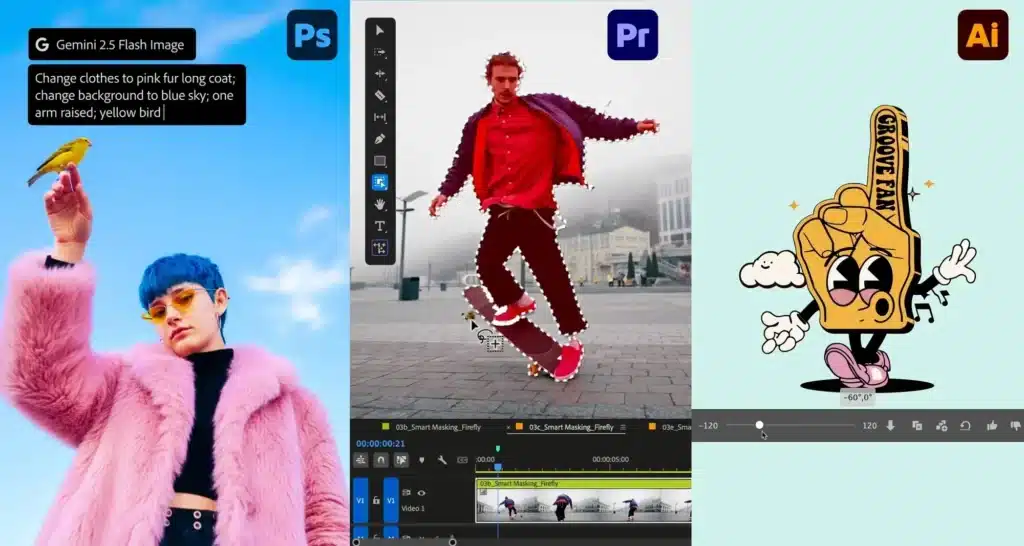
Adobe introduced a wave of AI updates across its platforms at its MAX conference, including conversational assistants, a new Firefly Image Model with upgraded features, broader access to third-party models, new video tools, and more—positioning itself as an open AI layer for creatives.
The details:
- AI assistants come to Photoshop and Express for image creation and editing, with Adobe also previewing an agentic assistant called “Project Moonlight”
- Firefly Image Model 5 arrives with “Prompt to Edit” for conversational editing, along with new video features like AI soundtracks, voiceovers, and editing tools
- Firefly will also allow for custom image models, allowing artists to personalize outputs using their own work for training
- New Google Cloud and YouTube partnerships bring Gemini, Veo, and Imagen into Adobe’s ecosystem, with Premiere’s editing tools heading to Shorts
Why it matters: Adobe just declared its AI strategy: become the Switzerland of creative AI by integrating everyone’s models instead of competing alone. This is brilliant positioning for a legacy creative giant facing threats from Midjourney, Runway, and other AI-native startups. The Firefly Image Model 5 “Prompt to Edit” feature brings conversational editing—instead of hunting through menus, you just say “make the sky more dramatic” and it happens.
That’s the interface evolution creatives have been waiting for. Custom model training is huge for professional artists worried about AI replacing their style—now they can train Firefly on their own work, essentially creating a personalized AI assistant that speaks their visual language. The Google Cloud partnership is strategic chess: Adobe gets access to Gemini (text), Veo (video), and Imagen (images), while Google gets distribution through Adobe’s massive creative user base.
Elon Musk’s Grokipedia Launch

Elon Musk’s xAI just launched Grokipedia, a Wikipedia-like encyclopedia and the latest salvo in Musk’s culture war against perceived “woke bias”—but it appears to be built on the bones of the very platform he’s trying to replace.
The details:
- Version 0.1 surfaced more than 885K articles by Monday evening, versus Wikipedia’s 7+ million in English; Musk says rapid iterations are forthcoming
- The site ships with a stark, search-first UI and bare-bones entries that mimic Wikipedia’s structure—yet so far, little to no imagery
- Editing remains gated: an “Edit” button materialises on select pages only, revealing a changelog of completed edits stripped of clear attribution
- Musk is pitching a fast update: a 1.0 “10X better” release, with the claim that the current site already beats Wikipedia
Why it matters: Musk is positioning Grokipedia as an AI-led, less-biased alternative that will “pursue the truth,” reflecting his critiques of Wikipedia’s alleged left-wing tilt. But here’s the awkward part: Grokipedia heavily mimics Wikipedia’s look and content—sometimes cited as ‘adapted from’ Wikipedia itself. So Musk is using Wikipedia to build a Wikipedia competitor while claiming that Wikipedia is biased. That’s… ironic. The 885K articles versus Wikipedia’s 7M+ in English show Grokipedia starting from a massive content deficit. Musk’s promise of “rapid iterations” and a “10X better” version 1.0 suggests heavy AI generation to close the gap fast.
Also read about: Anthropic Brings Claude Directly into Excel, plus OpenAI and Qualcomm

Jigar Chaudhary is the Editor-in-Chief at UrviumAI, where he oversees coverage of artificial intelligence news, tools, and in-depth studies. With over 5 years of experience analyzing AI and robotics, he focuses on maintaining high editorial standards, accurate reporting, and clear explanations to help readers understand how AI is shaping the future.