Fei-Fei Li’s World Labs Launches Marble

AI ‘Godmother’ Fei-Fei Li’s World Labs just released Marble, its first commercial world model that generates persistent 3D environments from text, images, videos, or 3D layouts, positioning it ahead of rivals like Google’s Genie and Decart.
The details:
- Users can both create new worlds via text, image, and video prompts or edit, combine, and expand on existing ones to make detailed changes
- The platform lets creators export worlds as Gaussian splats, meshes, or videos, allowing for use and import into gaming, VFX, and VR workflows
- The model is now generally available after its initial September release in preview, offering both freemium and paid tiers starting at $20/month
- Marble coincides with Li’s essay on spatial intelligence, saying world models are a crucial step forward from LLMs without grounding in physical space
Why it matters: Beyond gaming and VR, applications are limitless—from robot training simulations to architecture design to movie world-building. Like image and video AI tools, world models will soon be standard in many creative workflows.
OpenAI’s GPT-5.1 with New Personality Presets
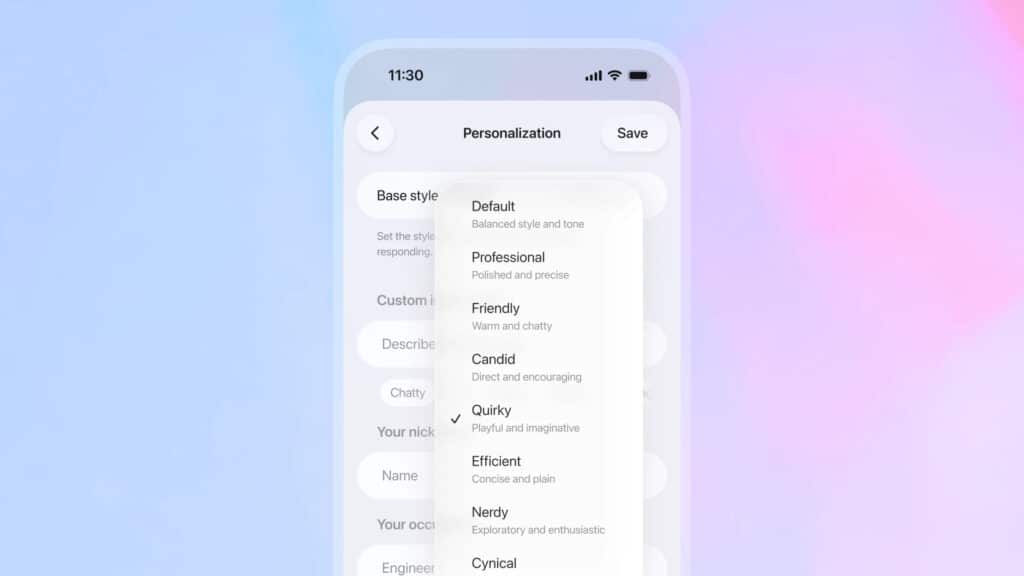
OpenAI just rolled out GPT-5.1, an upgraded version of its flagship model that emphasizes a more conversational tone and new user customizations—introducing eight personality presets alongside improvements to reasoning speed.
The details:
- The release includes 5.1 Instant (warmer and more instruction-focused) and Thinking (upgraded efficiency and clarity)
- Users can now select from eight tone presets: Default, Professional, Friendly, Candid, Quirky, Efficient, Nerdy, and Cynical to customize the model
- The company also introduced experimental settings like emoji use, warmth level, and response length, available via ‘Personalization Settings’
- OpenAI did not provide benchmarks for the 5.1 rollout, only showing a chart comparing time spent on easy vs. hard tasks compared to GPT-5
Why it matters: This rushed-feeling release with less hype and no benchmarks suggests OpenAI is either racing to beat Google’s Gemini 3 launch or shifting to faster, smaller incremental updates like competitors do.
OpenAI Battles Court Order on ChatGPT Logs
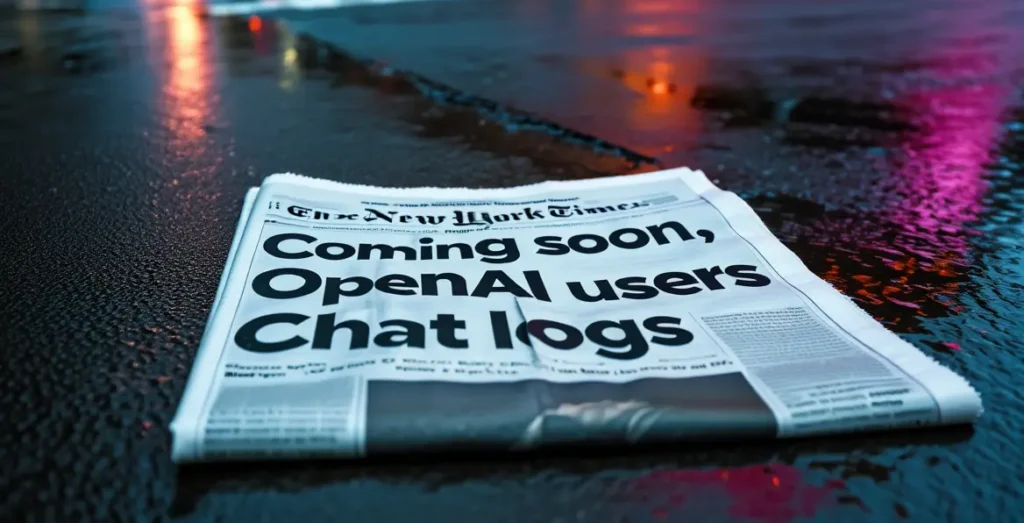
OpenAI is pushing to appeal a ruling that requires the AI leader to hand over 20M anonymized ChatGPT conversations to the New York Times as part of an ongoing copyright lawsuit, calling the request an “invasion of user privacy.”
The details:
- A judge ruled that the requested chat logs were appropriate discovery material, saying OpenAI’s de-identification process already protects users’ privacy
- The NYT originally requested 1.4B chats, before narrowing to a random sample of 20M from Dec. 2022 to Nov. 2024 to look for potential copyright violations
- OpenAI aims to remove the order in a letter to the court, also publishing a blog publicly detailing its stance on user privacy and the “baseless lawsuit”
- OpenAI argued that “99.99%” of the transcripts have no connection to the copyright claims, calling the request a “speculative fishing expedition”
Why it matters: OpenAI continues fighting, but the court has likely decided. Positioning this as a user privacy issue helps sway public opinion, though anonymized chats will probably reach the NYT eventually. Expect “AI confidentiality” to become a bigger conversation.
Also Read About: Meta’s Yann LeCun Plans to Exit, ElevenLabs’ Celebrity AI Voice, SoftBank Cuts Nvidia for OpenAI

Jigar Chaudhary is the Editor-in-Chief at UrviumAI, where he oversees coverage of artificial intelligence news, tools, and in-depth studies. With over 5 years of experience analyzing AI and robotics, he focuses on maintaining high editorial standards, accurate reporting, and clear explanations to help readers understand how AI is shaping the future.