Karpathy Urges Schools to Ditch AI Homework Detection 📚

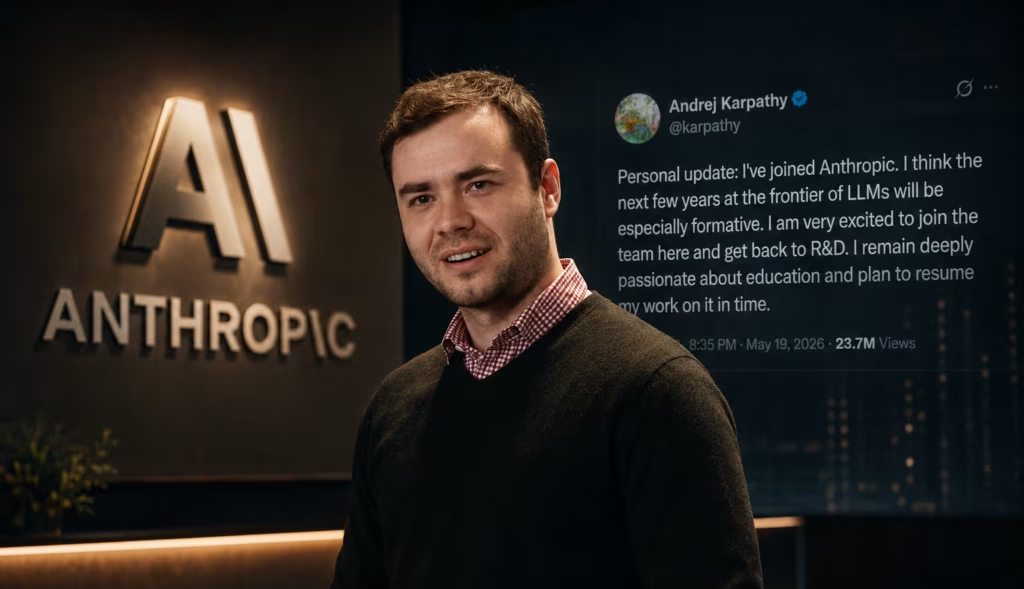
Here’s a reality check for every school board out there! Former OpenAI researcher Andrej Karpathy, one of the most respected minds in AI, just told educators to give up on trying to catch AI-generated homework. He says the detection tools are completely broken, and it’s time for the education system to adapt.
Here’s his simple, but brutal, argument:
- The War is Lost: Karpathy states educators will “never be able to detect” the use of AI, calling current detectors “doomed to fail.” He notes that models like Google’s Nano Banana Pro can solve complex exams and even mimic a student’s handwriting!
- The New Solution: Instead of policing technology, he proposes moving all graded work-especially tests and exams-to in-school settings where students can be monitored.
- Embrace the Tool: Outside the classroom, students should be encouraged to use AI as a learning companion.
- The Goal: Education’s purpose should be to ensure students are “proficient in the use of AI” but also have the foundational knowledge to “exist without it” (like knowing basic maths despite having a calculator).
Why it matters: AI is moving too fast for schools to keep up. Trying to use broken detection tools creates stress and encourages cheating. Karpathy’s proposal forces a fundamental, necessary shift: grading what students know, not what they can copy at home.
UrviumAI Take: Karpathy’s idea of the “flipped classroom” is exactly what AI demands. For teachers, review your professional development plan. If AI detectors are useless, the focus should shift entirely to creating critical-thinking assignments that ask for unique opinions or real-world applications, which are much harder for a general AI to complete accurately.
Harvard AI Pinpoints Disease-Causing DNA Mutations 🧬
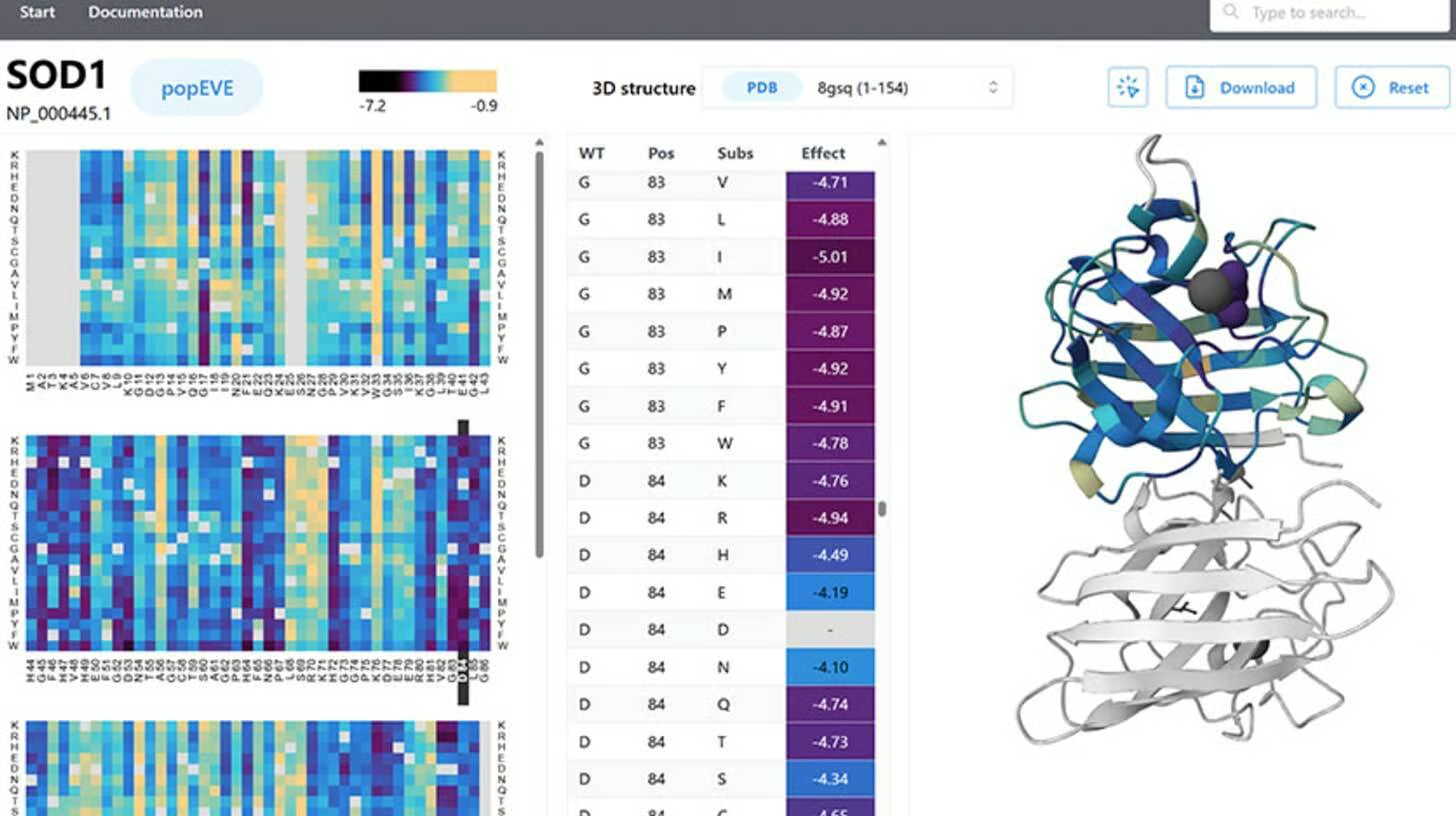
This is a massive win for families seeking answers! Harvard Medical School just launched an incredible new AI tool called popEVE. This genetic analysis model can scan a patient’s entire genome and pinpoint harmful DNA mutations with mind-blowing accuracy, outperforming DeepMind’s Alpha Missense.
Here’s why popEVE is a breakthrough:
- Precision Diagnosis: It reduced the percentage of healthy people wrongly flagged as carrying dangerous variants from Alpha Missense’s 44% down to just 11%, significantly cutting false positives.
- Solving Cold Cases: Researchers applied the model to 31,000 children with severe, long-undiagnosed developmental disorders and successfully solved roughly one-third of the cases.
- New Discoveries: The analysis flagged over 120 genes that had no prior known connection to the conditions, opening up brand new avenues for scientific understanding.
- Global Context: PopEVE works by analyzing mutation patterns across hundreds of thousands of species and calibrating those results against large databases of healthy human DNA.
Why it matters: For families who have spent years on a “diagnostic odyssey” without an answer for their child’s rare genetic condition, popEVE offers hope. This AI is not just identifying known problems; it’s expanding scientific understanding by surfacing genes no one knew to look for.
UrviumAI Take: Reducing false positives from 44% to 11% is a huge leap in clinical reliability. And those who want to know more, research how the integration of evolutionary data (from hundreds of thousands of species) is often more effective in identifying novel human diseases than just using human-only datasets. This blending of biology and AI is the key to cracking rare genetic codes.
Scientists Decode Brain-Gut Connection 🧠
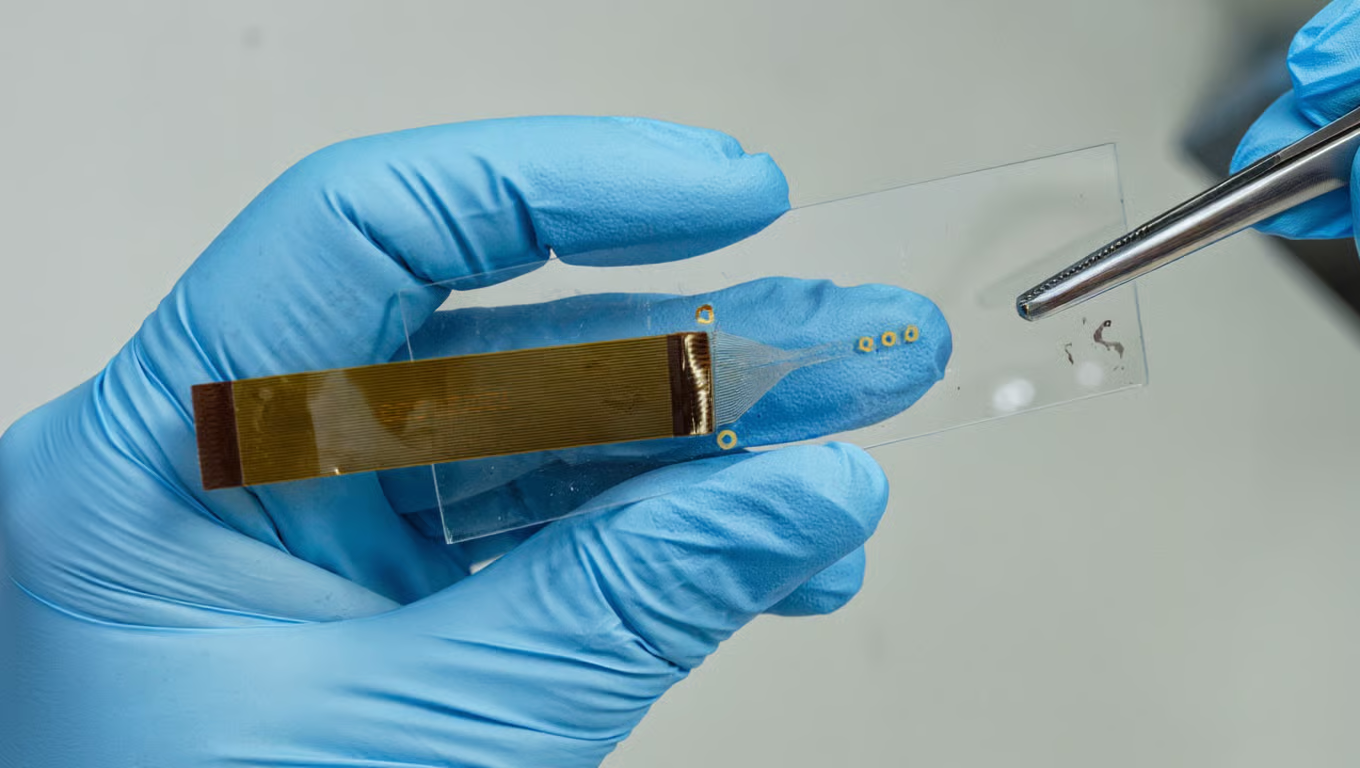
Scientists just figured out how to “eavesdrop” on one of the body’s most secretive conversations: the one between your brain and your gut! Researchers from the University of Cambridge and Dartmouth built an incredible hair-thin, soft implant that slips directly into the layers of the colon.
Here’s the science behind the “second brain”:
- Tapping the Source: The device connects to the enteric nervous system (ENS), often called the “second brain,” which is packed with 600 million neurons and manages gut motion, immunity, and secretion.
- Real-Time Signals: The nano-device records the electrical signals travelling between the gut and the brain in real-time for up to two weeks (tested in pigs and rodents).
- Why It’s a Breakthrough: Because the implant is soft and flexible, it doesn’t damage the constantly moving gut tissue. This allows researchers to track how the ENS responds to stress, food, or disease over time in a live setting.
Why it matters: Evidence is growing that the gut microbiome heavily influences mental health and neurological disorders. This new implant finally gives scientists a crucial window into the live neural traffic of the gut-brain axis, opening the door to new bioelectronic treatments for everything from irritable bowel disease to severe neurological conditions.
UrviumAI Take: This nano-implant technology is the key to unlocking the brain-gut axis secrets. You can research some of the conditions that are directly linked to the brain-gut axis, such as Irritable Bowel Syndrome (IBS) or certain types of anxiety. This will help you appreciate the massive medical potential this tiny implant holds.
Read Yesterday’s AI News: Sutskever: AI Scaling Ends, Anthropic: Productivity Doubles, and Tesla’s New AI Chip

Jigar Chaudhary is the Editor-in-Chief at UrviumAI, where he oversees coverage of artificial intelligence news, tools, and in-depth studies. With over 5 years of experience analyzing AI and robotics, he focuses on maintaining high editorial standards, accurate reporting, and clear explanations to help readers understand how AI is shaping the future.