
Anthropic Signs $200M Deal to Bring its LLMs to Snowflake’s Customers 🤝

Anthropic is doubling down on its enterprise strategy in a HUGE way! The AI lab just announced a massive $200 million multi-year expansion of its partnership with the cloud data giant Snowflake. This deal cements Anthropic’s focus on businesses, contrasting sharply with its rivals’ push for individual users.
Here’s why this is big for business users:
- Frontier AI in Your Data: The deal brings Anthropic’s top models, including Claude Opus 4.5 (and Sonnet 4.5), directly into the Snowflake AI Data Cloud. This means the AI can work with your most critical business data where it already lives—safely and securely.
- Nine-Figure Commitment: Snowflake CEO Sridhar Ramaswamy called Anthropic one of the “very select group of partners where we have nine-figure alignment.”
- AI Agent Focus: The partnership includes a joint effort to help Snowflake’s over 12,600 global customers build and deploy their own custom AI agents to handle complex, multi-step analysis on their data.
- Enterprise Priority: This follows Anthropic’s recent large deals with Deloitte (for 500,000 employees) and IBM, proving their strategy of selling high-value, secure AI to large corporations is paying off.
Why it matters: Companies are terrified of sending sensitive data out to the public internet for AI analysis. By embedding Claude directly inside Snowflake’s highly governed environment, Anthropic removes that major security risk, making frontier AI genuinely useful for regulated industries like finance and healthcare.
UrviumAI Take: This deal perfectly illustrates the “AI Agent in a Box” model—bringing the AI to the data. If you work in a highly regulated industry (finance, legal, healthcare), research Snowflake’s “Cortex Agents” framework. See how their built-in governance features could allow your company to start moving AI pilots into production without compliance risk.
China’s Humanoid Robot Bubble: Is this good for USA? 🚧
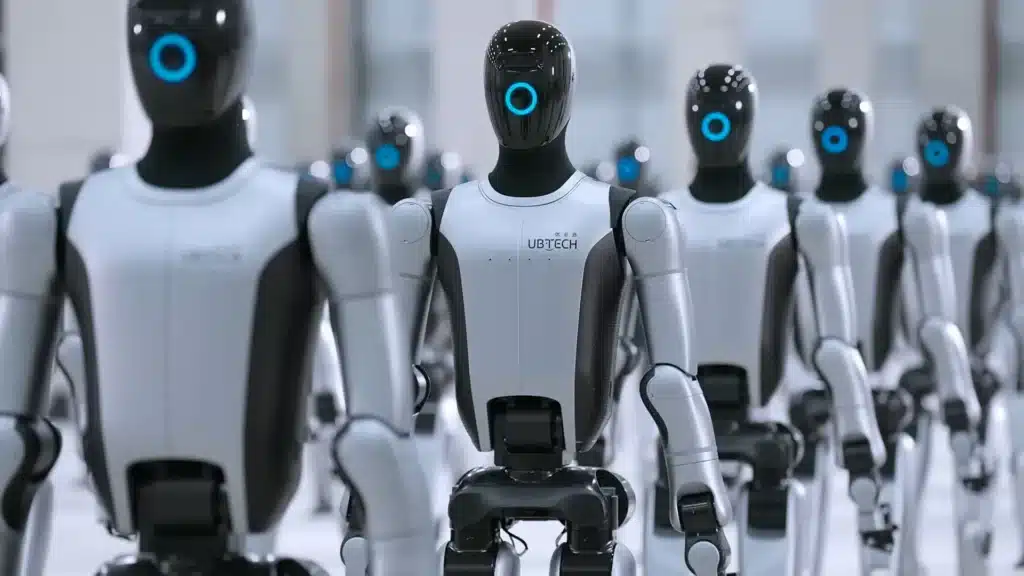
It looks like China has a classic tech bubble problem on its hands! China’s top economic agency, the NDRC (National Development and Reform Commission), is warning that there are now over 150 humanoid robot companies in the country, and they are creating too many nearly identical products.
The NDRC is worried that this “bubble”—where investment massively outpaces proven market demand—will lead to duplicate innovation and wasted resources.
Here’s why some U.S. experts think this is good news for America:
- The U.S. Model: Former NASA robotics leader Dr. Robert Ambrose suggests that while China is pushing for hyper-efficiency, the messy, chaotic, high-risk innovation of American entrepreneurship often leads to greater, longer-lasting breakthroughs (like the automobile or the internet).
- The Dot-Com Parallel: Ambrose argues that bubbles, if allowed to burst naturally, force companies to innovate or die. The U.S. dot-com bubble of the late 90s produced losers like Pets.com, but also massive winners like Amazon, establishing U.S. tech dominance.
- The Risk of Regulation: China’s efforts to regulate the number of companies might accidentally “dampen” the innovation itself, risking an explosion of creativity.
- The Investment Gap: The U.S. is still playing catch-up, with major investments in Apptronik and Figure AI, but China is reportedly investing $138 billion nationally in robotics. The U.S. will need to leverage every advantage it can get, including the messiness of its own high-risk ventures.
Why it matters: Humanoid robots are seen as the backbone of economic and military power over the next century. The U.S. needs to foster its chaotic, innovative environment to ensure it stays the “disruptor”—not the “disrupted”—in the global race for robotics dominance.
UrviumAI Take: The tension between China’s need for efficiency and the U.S.’s chaotic innovation is a classic geopolitical problem. If we compare the number of humanoid companies in the U.S. (estimated to be around 25) to China’s 150+. Think about how the U.S. government could restart programs like the 2011 National Robotics Initiative to foster innovation without imposing regulation.
Google to Build Data Centers in Space in 2027 ☀️
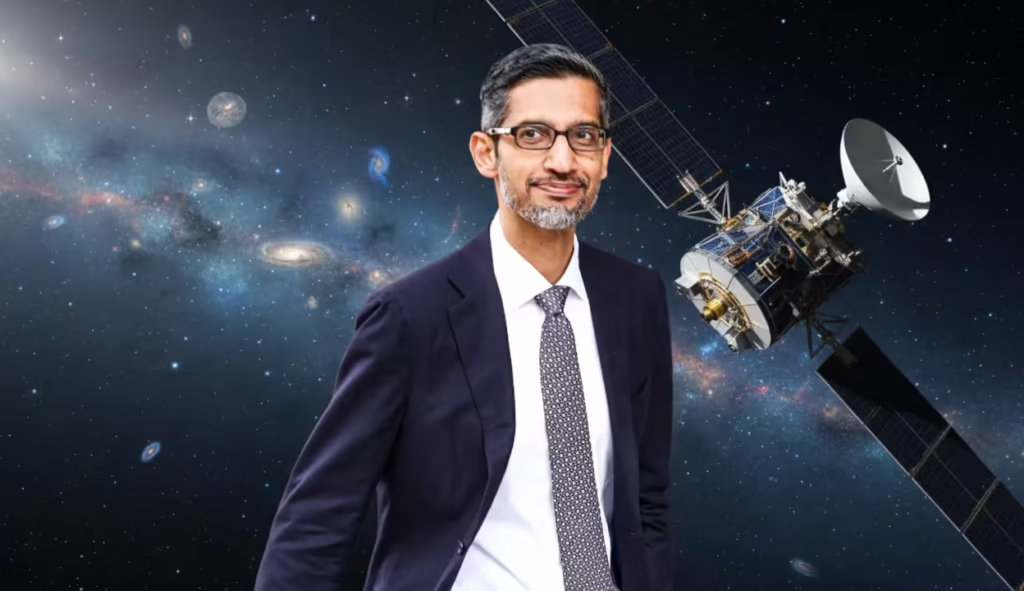
This is the kind of moonshot only Google would attempt! CEO Sundar Pichai just announced Project Suncatcher, an ambitious plan to launch solar-powered data center satellites into space by early 2027. This crazy idea is an attempt to solve the enormous energy needs of advanced AI by moving the infrastructure off-planet.
Here are the audacious details:
- Space Hardware: Google plans to launch two prototype satellites in 2027, which will carry their Trillium-generation TPU chips (specialized AI processors) that have already survived radiation testing for low-Earth orbit.
- Unlimited Energy: Solar panels in space can generate up to 8 times more energy than on Earth because they receive near-continuous sunlight with no weather or clouds getting in the way.
- The Vision: Pichai believes that within a decade, extraterrestrial data centers could be a normal way to build AI infrastructure, tapping into solar energy that’s “100 trillion times more” than Earth’s total electricity production.
- Cost Challenge: For the project to be cost-effective, launch costs need to drop significantly—a target Google believes SpaceX is on track to hit by 2035.
Why it matters: The energy demands of AI are crushing power grids globally. By moving training and processing infrastructure into orbit, Google is tackling one of the biggest challenges to scaling AI and potentially easing the environmental pressure on Earth. If this “moonshot” works, it reshapes the entire future of AI compute.
UrviumAI Take: This project’s success is entirely dependent on launch costs dropping to $200/kg. If we research the current cost-per-kilogram of launching cargo into orbit on a commercial rocket (like a Falcon 9 or Starship). This will give you a sense of just how massive the required drop in price is for Project Suncatcher to become economically viable.
Last AI News: OpenAI’s ‘Code Red’ for ChatGPT, Amazon’s New AI Stack, and Mistral 3 Models

Jigar Chaudhary is the Editor-in-Chief at UrviumAI, where he oversees coverage of artificial intelligence news, tools, and in-depth studies. With over 5 years of experience analyzing AI and robotics, he focuses on maintaining high editorial standards, accurate reporting, and clear explanations to help readers understand how AI is shaping the future.



Pingback: AI Carbon Footprint: Real Numbers by Model, Task & Country