Google to Enter the AI Glasses Market in 2026 🕶️

Google is back in the smart glasses game, and this time, they’re serious! The tech giant just announced that its new line of AI-powered smart glasses will launch in 2026. This is a major move to directly challenge Meta, which currently leads the consumer wearables space.
Here are the key details:
- Two Styles: Google is developing two distinct models. First, audio-only frames designed for hands-free conversational access to Gemini AI. Second, display versions that feature in-lens screens for private information like navigation and real-time translation.
- Fashion Forward: They are learning from the past! Google has teamed up with major partners to ensure the glasses are stylish and wearable all day, including Samsung, Warby Parker (via a $150M deal), and Korean fashion brand Gentle Monster.
- Lightweight Design: To keep the frames from being bulky, the complex processing will reportedly be offloaded to a connected smartphone, allowing the glasses to look more like regular eyewear.
Why it matters: Meta has successfully broken into the wearables space, but Google’s entry is a serious threat. Google’s combination of top-tier Gemini AI models, its sprawling Android ecosystem, and its major fashion partnerships could make for a strong, well-integrated rival in the market next year.
UrviumAI Take: Google’s choice of two styles is smart, as it addresses both privacy (audio-only) and utility (display). Research the different capabilities of Meta’s latest Ray-Ban display glasses versus the feature list of Google’s announced glasses. Understanding their differing approaches to “in-lens display” will reveal where the biggest innovation battleground lies.
Anthropic Brings Claude Code to Slack 💬
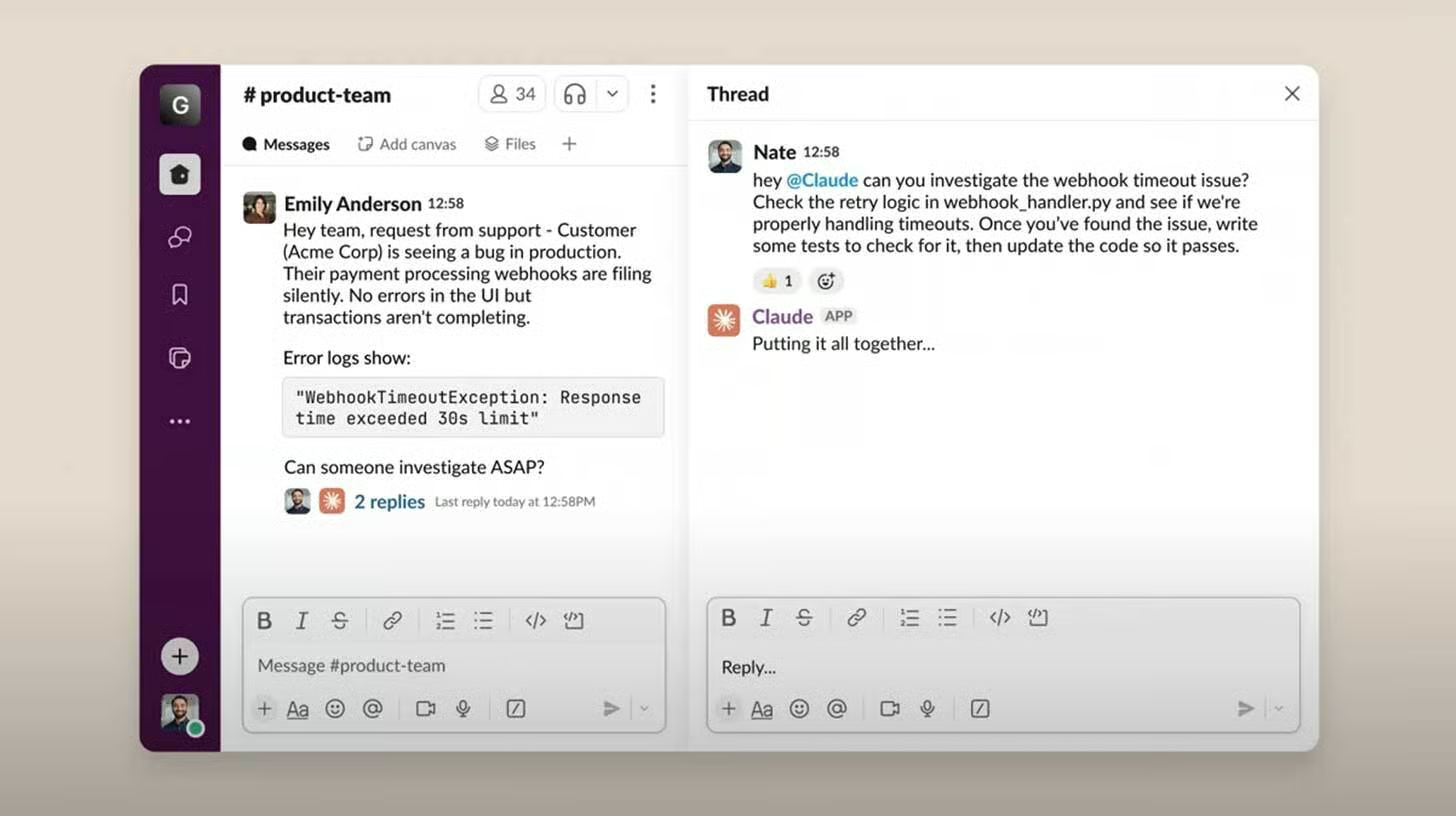
Your engineering team’s Slack channel is about to get a new teammate! Anthropic just rolled out a new beta integration that embeds Claude Code directly into Slack. This is a game-changer for developers, as it turns chat threads into automated software development workflows.
Here’s how this collaboration works:
- Code from Conversation: Simply tag @Claude in a Slack channel or thread. Claude Code automatically uses the context of the conversation—like a detailed bug report or feature request—as the input for the coding task.
- Full Automation: Claude doesn’t just give you code snippets; it handles the full workflow. It selects the correct code repository, posts progress updates back to the thread, and automatically delivers links for code review and pull requests once the task is complete.
- No App Switching: Developers can transition instantly from discussing a bug to implementing a fix without having to leave Slack for their Integrated Development Environment (IDE) or web app.
Why it matters: Slack is the critical communication hub for most engineering teams. By embedding Claude Code directly into that environment, Anthropic is turning its autonomous assistant into a constantly plugged-in teammate. This level of workflow automation is the future of enterprise software development, eliminating friction and accelerating development cycles dramatically.
UrviumAI Take: This integration is a perfect example of AI solving workflow friction. If you use Claude Code or a similar AI assistant, try using it to automate a multi-step, non-coding task you currently handle through email (e.g., “Draft a new project plan and generate five key objectives”). See if the AI can manage the task as efficiently as it manages code requests in Slack.
IBM to Acquire Confluent to Create Smart Data Platform for Enterprise Generative AI

IBM is making a huge, $11 billion bet on the future of enterprise data! IBM just announced it is acquiring Confluent, the data streaming pioneer built on Apache Kafka. This massive deal aims to deliver an end-to-end “smart data platform” that is purpose-built to fuel the next generation of AI agents.
Here’s why Confluent is worth $11 billion to IBM:
- The AI Necessity: AI agents and modern applications need access to real-time, trusted data. Confluent provides the platform to connect, process, and govern that data as it moves across hybrid cloud environments.
- “Smart Data Platform”: IBM CEO Arvind Krishna said the combined company will provide the “smart data platform for enterprise IT, purpose-built for AI.”
- Real-Time Data in Motion: Confluent excels at eliminating data silos by streaming reusable and reliable data in real time, a critical capability for the kind of automated, agentic AI that IBM is focused on.
- Financial Sense: The $11 billion acquisition is expected to be financially beneficial for IBM, boosting adjusted EBITDA within the first full year and free cash flow in year two.
Why it matters: Data infrastructure is the critical foundation of AI. By acquiring Confluent and its open-source Kafka technology, IBM fills a structural gap in its portfolio, gaining a necessary “nervous system” that allows its AI (like Watsonx agents) to make real-time decisions based on constantly streaming data. This is a clear move to position IBM as a leader in enterprise AI deployment.
UrviumAI Take: This acquisition is all about real-time data flow for AI agents. Research the concept of “event-driven architectures” versus traditional databases. Understanding how Confluent’s Apache Kafka (data streaming) enables AI agents to act instantly on “events” (like a stock trade or a server failure) explains why it’s a necessary component for true autonomous enterprise AI.
Last AI News: OpenAI Pulls “Ads” from ChatGPT, Poetiq Tops Reasoning with Gemini, and Meta Buys AI Pendant

Jigar Chaudhary is the Editor-in-Chief at UrviumAI, where he oversees coverage of artificial intelligence news, tools, and in-depth studies. With over 5 years of experience analyzing AI and robotics, he focuses on maintaining high editorial standards, accurate reporting, and clear explanations to help readers understand how AI is shaping the future.