U.S. DOE Signs on 24 Tech Giants for Genesis Mission 🏛️
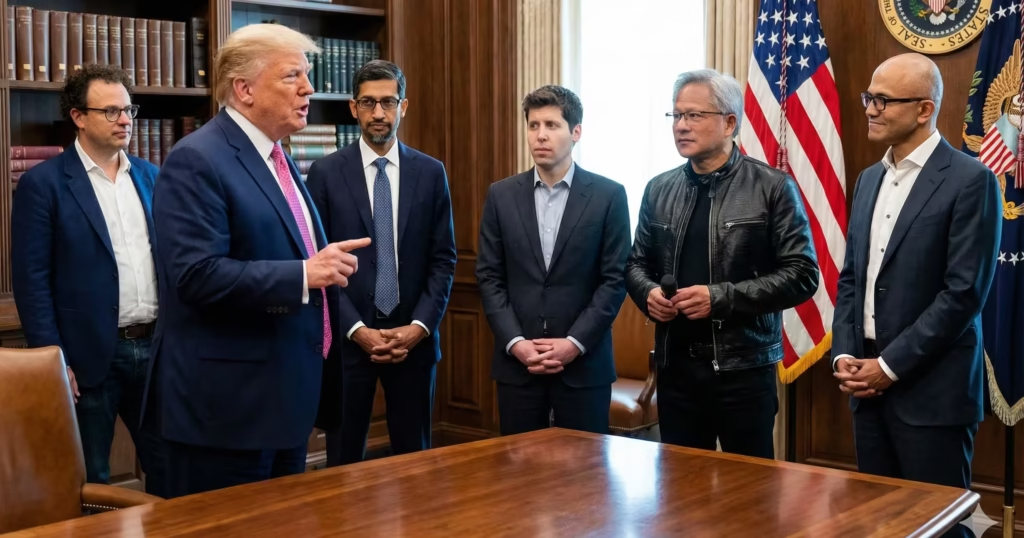
The “Avengers” of the AI world have just assembled! The U.S. Department of Energy (DOE) has officially signed agreements with 24 technology giants to power the Genesis Mission, a historic national effort to supercharge scientific discovery using artificial intelligence. This is being described as a “Manhattan Project” moment for modern science.
Here is who is joining the mission:
- The Heavyweights: The list includes OpenAI, Nvidia, Google, Microsoft, Amazon Web Services (AWS), and Anthropic, along with chipmakers like AMD and Intel.
- Massive Resources: The mission unites 17 national laboratories and over 40,000 researchers. AWS alone has pledged up to $50 billion in infrastructure support.
- Early Access: Google DeepMind is granting scientists early access to its specialized “AI co-scientist” agents and the AlphaGenome DNA model.
- Strategic Goals: The mission aims to double American scientific productivity within a decade, focusing on breakthroughs in nuclear energy, drug discovery, quantum computing, and advanced manufacturing.
Why it matters: This represents the largest public-private partnership in U.S. history for research and development. By giving the nation’s top scientists direct access to the world’s most powerful AI models and supercomputers, the U.S. is aiming to secure an unbeatable lead in the global race for technological and scientific dominance.
UrviumAI Take: This is the ultimate stress test for “AI for Science.” Keep a close eye on Argonne and Los Alamos National Labs. Since OpenAI is already deploying models on the Venado supercomputer there, these labs will likely be the first to announce a “Genesis” breakthrough—possibly in materials science or fusion energy—within the next 12 months.
OpenAI Opens ChatGPT App Marketplace to Developers 📱
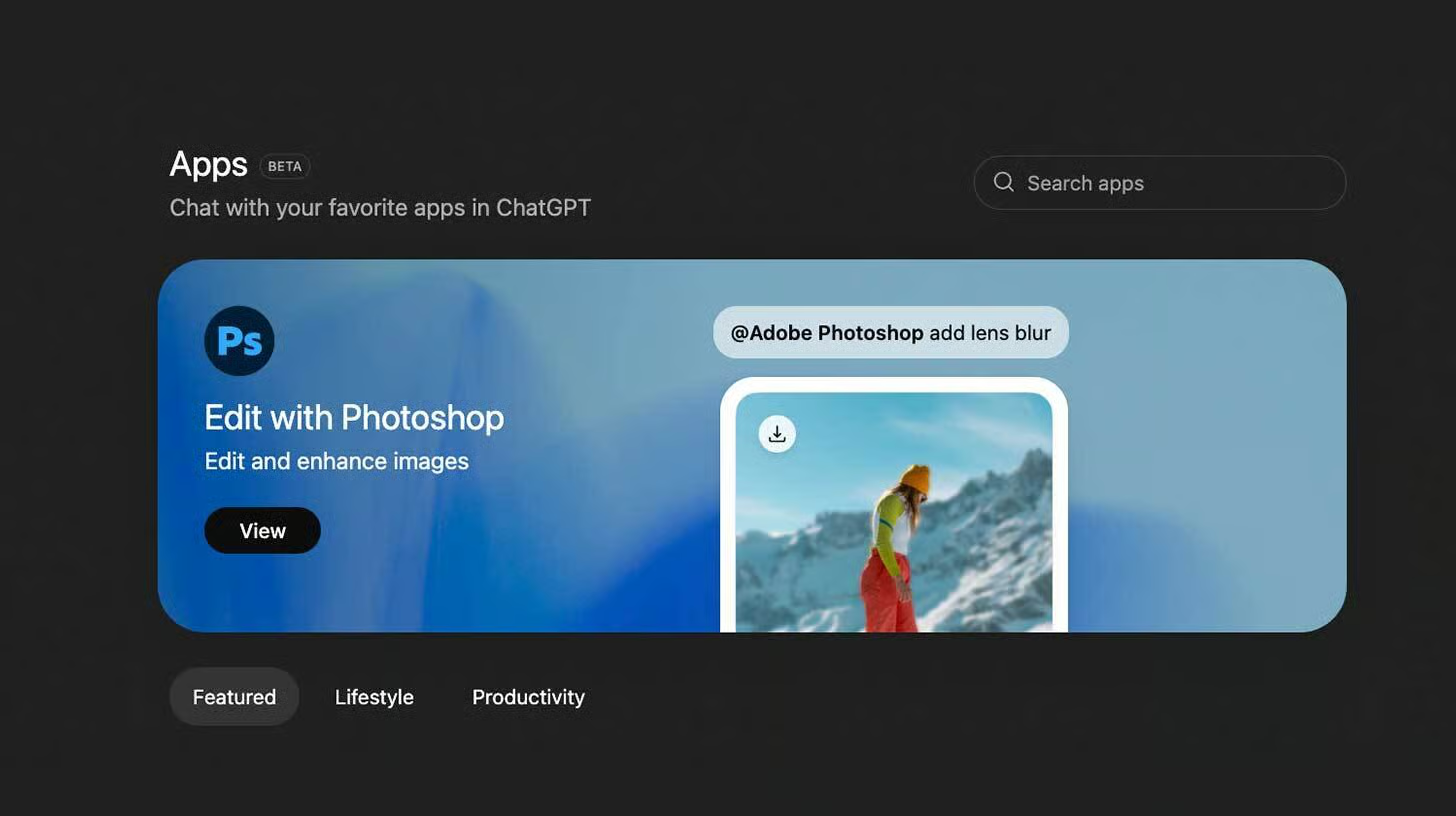
ChatGPT is becoming an “Everything App”! OpenAI just expanded its dedicated App Directory, opening the doors for third-party developers to submit their own integrated apps. This moves ChatGPT beyond a simple assistant and into a hub where you can get real-world tasks done directly in the chat.
Here is what’s coming to your tools menu:
- Submissions Open: Developers can now use the OpenAI Apps SDK (beta) to build chat-native experiences. These apps can take actions like ordering groceries, searching for apartments, or turning outlines into slide decks.
- Organized Directory: Users can browse a new directory organized into categories like Featured, Lifestyle, and Productivity.
- Top Partners: Major names like Photoshop, Canva, Spotify, DoorDash, and Zillow are already integrated, allowing you to use their professional tools without leaving ChatGPT.
- Smart Discovery: OpenAI is testing ways to suggest helpful apps automatically based on what you are talking about in your conversation.
- Privacy Controls: Users have full control over what data is shared and can disconnect an app at any time to immediately revoke its access.
Why it matters: This is OpenAI’s biggest play to make ChatGPT the primary interface for the internet. If you can order a pizza, book a flight, and edit a photo all from one chat box, you have less reason to use traditional search engines or individual apps. It’s the “App Store” moment for the AI generation.
UrviumAI Take: This is the transition from “Chatbot” to “Operating System.” For developers, focus on building apps that leverage the Model Context Protocol (MCP). This is the new standard that allows your app to securely feed unique, real-time data into ChatGPT, which is the most valuable feature for a power user.
Figure CEO Brett Adcock Launches New AI Lab ‘Hark’ 🚀
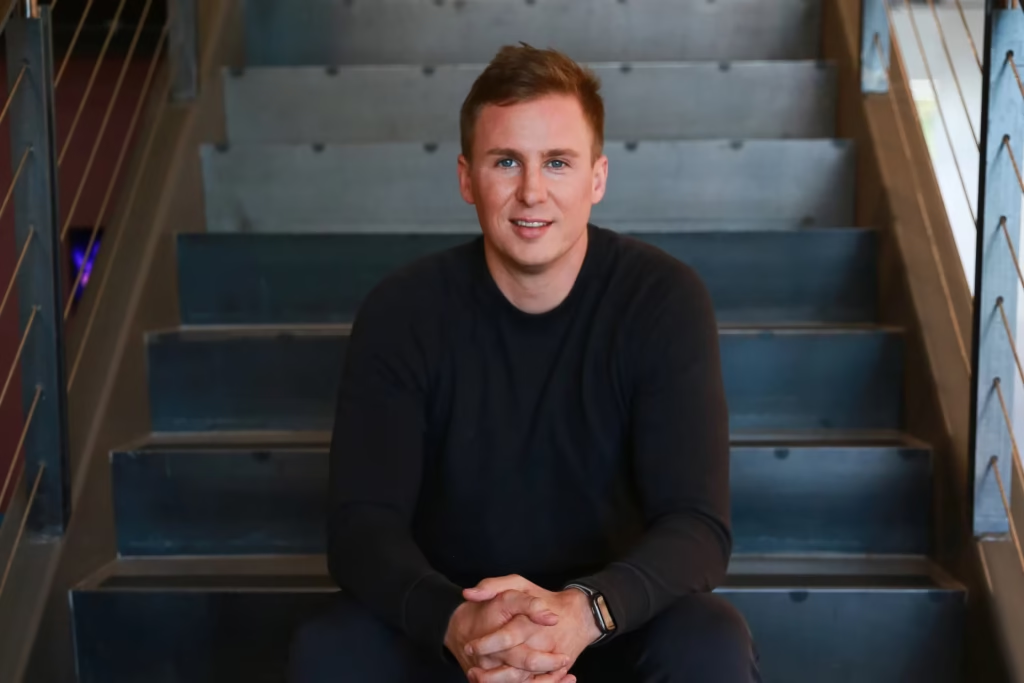
As if running a $39 billion robotics company wasn’t enough! Brett Adcock, the founder and CEO of Figure AI, is reportedly launching a brand-new AI research lab called Hark. Backed by $100 million of Adcock’s personal money, the goal is to build a new kind of “human-centric” intelligence.
Here is what we know about Hark:
- The Vision: Hark isn’t just trying to solve math problems. It is pursuing AI capable of proactive reasoning and continuous self-improvement, designed to “care deeply about humans.”
- The Infrastructure: Hark’s first massive GPU cluster reportedly came online this week, showing that the lab is ready to start serious training immediately.
- Figure Integration: While Hark is a separate lab, it follows the path of Tesla and xAI, where robotics (Figure) and core AI research (Hark) work together to create a more integrated “synthetic human.”
- Aggressive Timeline: Adcock recently stated at Dreamforce that he believes humanoids will outnumber humans in workplaces within a decade. Hark is likely the “brain” intended to power that revolution.
Why it matters: Despite the massive lead held by giants like OpenAI and Google, entrepreneurs like Adcock believe there are still unexplored directions in AI—specifically how AI interacts with and “cares” for people. With his track record in robotics, Hark could quickly become a major force in the race for safe, human-aligned superintelligence.
UrviumAI Take: Adcock’s “personal funding” strategy is a power move that ensures zero interference from outside investors. You can follow Hark’s research on “proactive reasoning.” Most current AI is “reactive” (it waits for you to ask). Proactive AI that anticipates your needs is the holy grail for both robotics and personal assistants.
Last AI News: Gemini 3 Flash Rollout, Amazon’s $10B OpenAI Deal, and Grok Voice Agent API

Jigar Chaudhary is the Editor-in-Chief at UrviumAI, where he oversees coverage of artificial intelligence news, tools, and in-depth studies. With over 5 years of experience analyzing AI and robotics, he focuses on maintaining high editorial standards, accurate reporting, and clear explanations to help readers understand how AI is shaping the future.