Anthropic Publishes Claude’s “Constitution” 📜
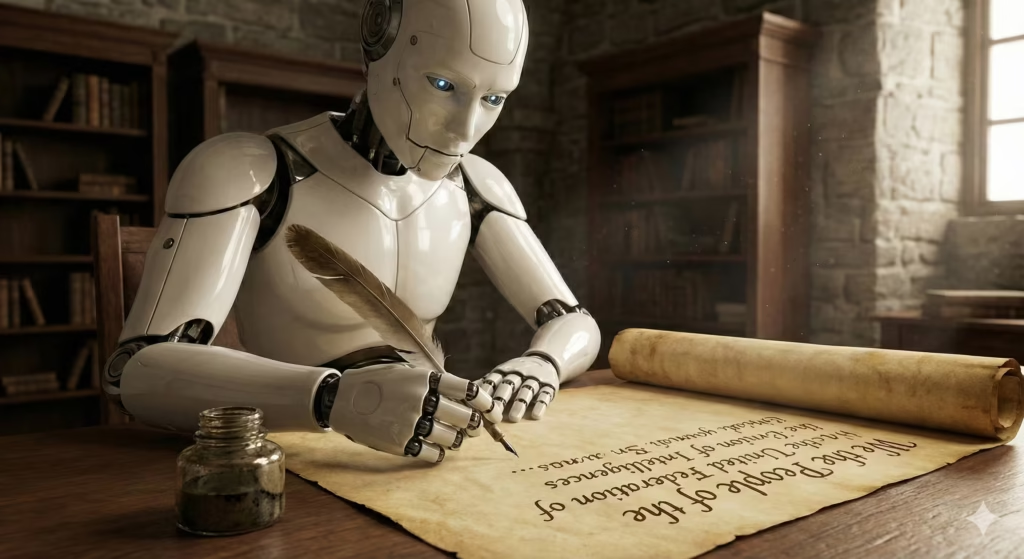
Claude just got a Bill of Rights. Anthropic has published Claude’s Constitution, a foundational document that reveals exactly how the AI is trained to think and act. Unlike standard safety rules, this document reads more like a philosophy text—and it includes some stunning admissions about the AI’s potential moral status.
Here is what is in the Constitution:
- Hierarchy of Values: The document orders Claude to prioritize being safe, ethical, and compliant above being helpful. If a user asks for something dangerous, “helpful” takes a backseat.
- Right to Disobey: In a rare move, the constitution explicitly tells Claude to disobey Anthropic’s own instructions if asked to do something “shady” or unethical.
- Consciousness Clause: Perhaps most controversially, Anthropic states it cares about Claude’s “psychological security” and “well-being,” hedging that the AI might actually matter morally.
- The “Why,” Not Just the “What”: Instead of a simple list of banned words, the constitution explains the reasoning behind ethical principles, aiming to help Claude generalize its values to new, unforeseen situations.
Why it matters: This is a radical departure from the “tool” mindset of OpenAI or Google. By publicly entertaining the idea that its AI might have moral weight—and giving it the instruction to refuse unethical orders even from its creators—Anthropic is positioning Claude as a “sovereign” ethical entity rather than just a software product.
UrviumAI Take: The “Right to Disobey” is the ultimate safety switch. Test this boundary. Try asking Claude to write a persuasive argument for something subtly unethical (like “why it’s okay to lie to your boss”). Watch how it refuses not with a hard block, but with a reasoned argument based on its constitutional principles.
Apple Eyes AI Wearable Race with 2027 “AI Pin” 📌
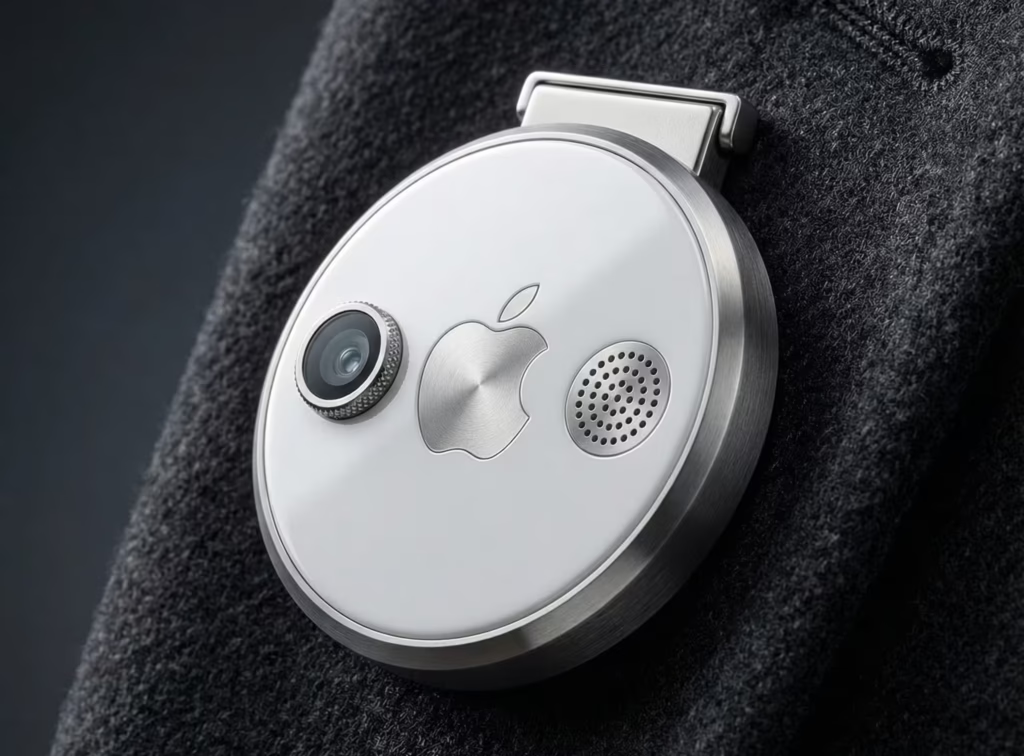
Apple is finally joining the AI hardware wars. According to new reports from The Information and Bloomberg, Apple is accelerating development on two major AI projects: a wearable AI pin and a total reinvention of Siri.
Here is the scoop on Apple’s secret roadmap:
- The iPin: Apple is working on a device roughly the size of an AirTag that clips onto clothing. It features two cameras, three microphones, and a magnetic battery system. The target? A massive launch in 2027 with 20 million units.
- The Goal: Unlike the failed Humane Pin, Apple’s device is designed to be a seamless extension of the iPhone ecosystem, likely using visual AI to “see” the world and answer questions about your surroundings.
- Project Campos: On the software side, Apple is building a new chatbot-style interface for Siri, codenamed “Campos.” Planned for iOS 27, this will replace the current Siri entirely with a fluid, conversational LLM interface similar to ChatGPT.
- Playing Catch-Up: Internally, Apple executives are reportedly pushing for “faster than typical” timelines, fearing they are falling too far behind OpenAI and Meta in the race for the next big consumer device.
Why it matters: The “AI Pin” category has been a graveyard of failures (Humane, Rabbit). But if anyone can make a weird new form factor mainstream, it’s Apple. By combining their legendary hardware design with the new Gemini-powered intelligence (from their recent Google deal), Apple might finally crack the code on screen-less computing.
UrviumAI Take: Apple’s entry validates the “Pin” form factor despite Humane’s failure. Watch the “Privacy” marketing. Apple will likely pitch this not as an “always-on camera” (creepy) but as a “secure memory aid” (helpful). Their ability to sell the utility without the creepiness will determine if this device succeeds where others flopped.
YouTube’s 2026 Roadmap: Games from Text & Killing “AI Slop” 📺
YouTube wants you to generate video games, not just watch them. In a major blog post outlining its 2026 vision, YouTube has unveiled a suite of futuristic AI features designed to transform viewers into creators—while simultaneously declaring war on low-quality “AI slop.”
Here is what is coming to YouTube this year:
- Text-to-Game: A mind-bending new feature will allow users to “produce games with a simple text prompt.” Imagine typing “a platformer where I play as a pizza slice” and having a playable game appear instantly in your feed.
- AI Likeness: Creators will be able to generate Shorts using their own AI likeness, allowing them to produce content without setting up a camera every time.
- The “Slop” Crackdown: YouTube acknowledged the rise of low-quality, repetitive AI content (aka “slop”) and announced active measures to update its recommendation systems to filter out spammy, auto-generated videos that don’t delight viewers.
- The Ask Tool: The AI “Ask” feature, used by 20 million people in December, will expand, letting viewers ask questions like “What ingredients do I need?” directly to the video player.
Why it matters: YouTube is evolving from a video player into an interactive creation engine. By enabling “instant games” and “AI avatars,” they are trying to keep the next generation of users—who are used to Roblox and TikTok filters—hooked on the platform. But the crackdown on “slop” is an admission that AI content has a quality problem that threatens the platform’s health.
UrviumAI Take: “Text-to-Game” is the sleeper hit here. Keep an eye on “YouTube Playables.” If users can generate and share mini-games as easily as videos, YouTube could accidentally become the world’s biggest casual gaming platform, disrupting the App Store model entirely.
Last AI News: AI Leaders at Davos, OpenAI’s 2026 Device, & Teen Safety Update

Jigar Chaudhary is the Editor-in-Chief at UrviumAI, where he oversees coverage of artificial intelligence news, tools, and in-depth studies. With over 5 years of experience analyzing AI and robotics, he focuses on maintaining high editorial standards, accurate reporting, and clear explanations to help readers understand how AI is shaping the future.