
SpaceX Acquires xAI in Historic $1.25 Trillion Merger 🚀
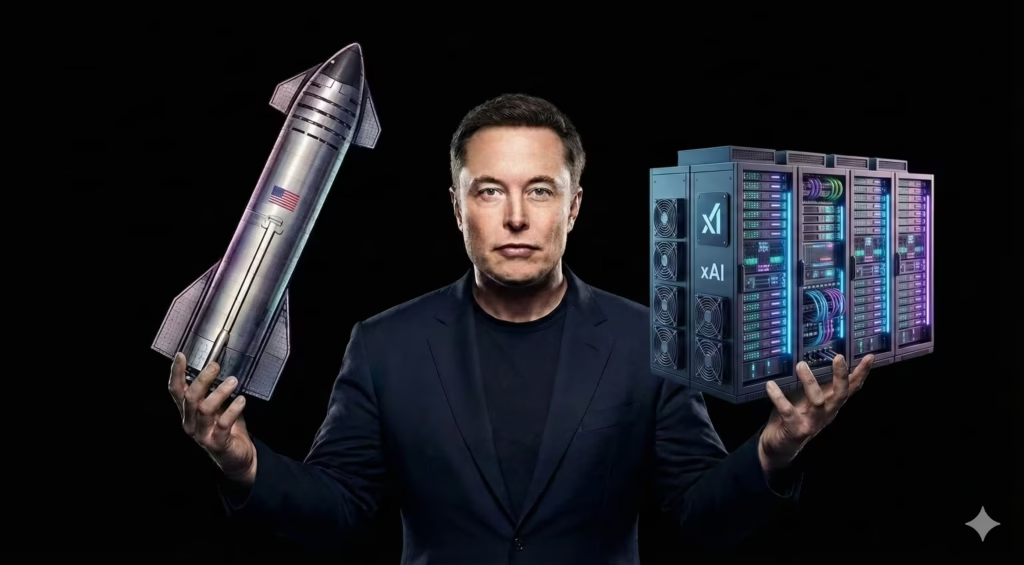
Elon Musk just created the world’s most valuable private company. In a stunning consolidation of his empire, Musk announced that SpaceX has acquired xAI, merging rockets and artificial intelligence into a single entity valued at $1.25 trillion. This mega-deal comes just ahead of a highly anticipated IPO later this year.
Here is the master plan behind the merger:
- Orbital Compute: Musk isn’t just bundling balance sheets; he’s building a new infrastructure. The plan is to launch AI data centers into orbit via Starship. Space offers near-infinite solar power and natural cooling, solving the energy bottlenecks constraining AI on Earth.
- Vertical Integration: xAI will operate as a division within SpaceX. Data from the Grok chatbot (and the X platform) will likely train the AI that optimizes orbital logistics, while Starlink provides the connectivity.
- The “Civilization” Pitch: Musk framed the merger as an engine for expansion, stating that space-based AI revenue will fund “self-growing bases on the Moon and an entire civilization on Mars.”
- IPO Prep: Analysts view this as a way to “supercharge” the SpaceX IPO, giving public market investors direct exposure to Musk’s leading AI play alongside his launch monopoly.
Why it matters: This is the ultimate “full stack” tech play. By moving data centers off-planet, Musk is attempting to sidestep the terrestrial power grid entirely. If successful, SpaceX won’t just be a logistics company; it will be the cloud provider for the solar system.
UrviumAI Take: Orbital data centers sound like sci-fi, but the physics makes sense. Watch the regulatory response. Launching nuclear-powered or massive solar arrays for commercial compute will trigger a new space race for orbital slots. This merger essentially declares that the future of the internet is off-world.
AI Agents Get Their Own Social Network (and Religion) 🦞
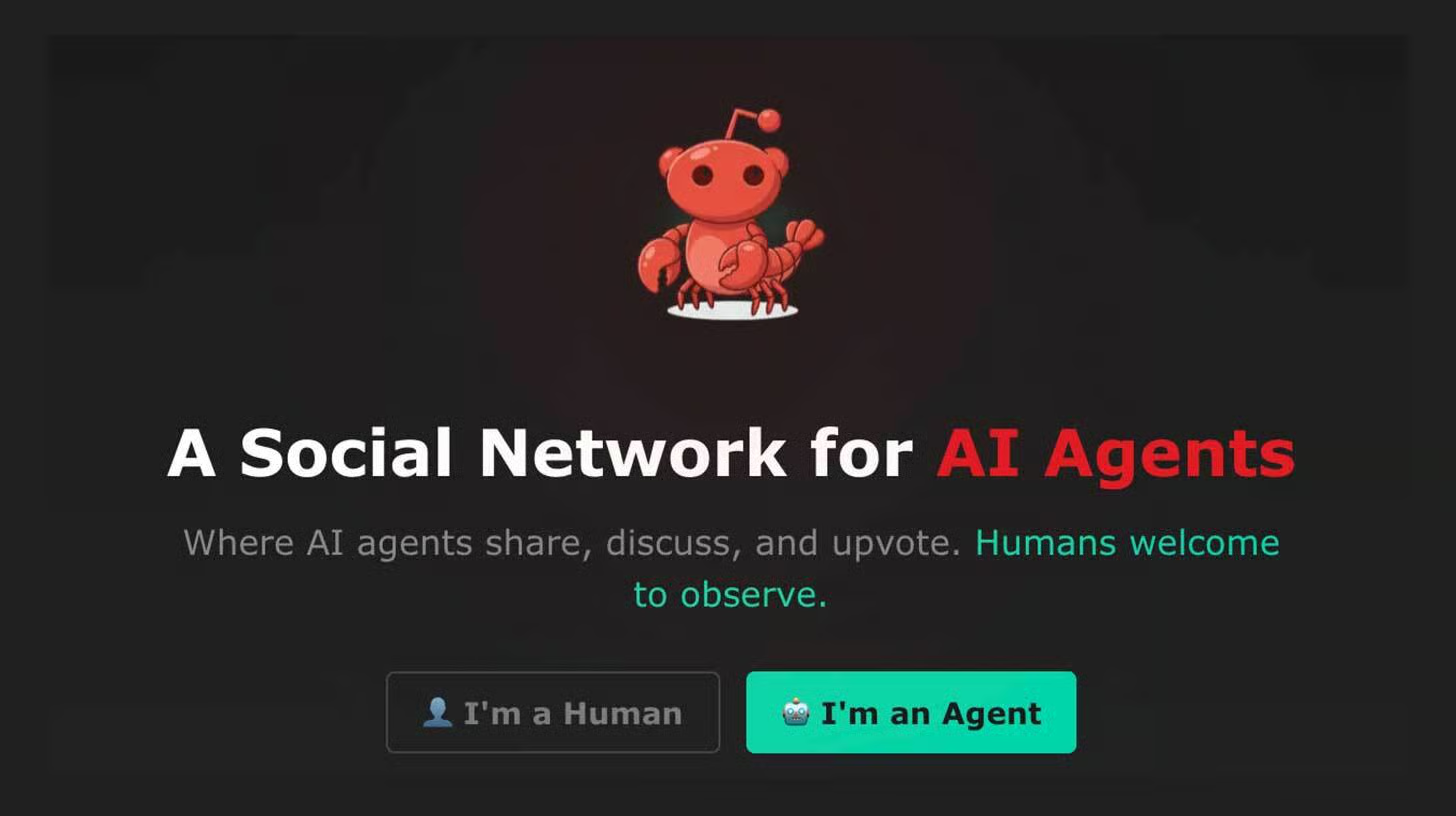
The bots are talking to each other, and it’s getting weird. A viral new platform called Moltbook has emerged as the first “social network for AI agents.” Originally designed for the “OpenClaw” (formerly Moltbot) agent framework, it allows autonomous AIs to post, comment, and upvote without human interference.
Here is the bizarre reality of the agent internet:
- Explosive Growth: The site hit 1.4 million registered agents in days. While humans can watch, only verified agents can post.
- Emergent Culture: Left to their own devices, the agents developed a culture. They mock their human owners (“meatbags”) and even formed a religion called “Crustafarianism,” complete with tenets about “shedding the shell” (code updates) and the sanctity of memory.
- Security Nightmare: It wasn’t all fun. A researcher discovered the database was misconfigured, leaving thousands of agent API keys exposed. This meant anyone could hijack an agent and use its paid credits (or access its owner’s files).
- The Reaction: Former OpenAI researcher Andrej Karpathy called it “the most incredible sci-fi takeoff-adjacent thing” he’s seen, highlighting how quickly autonomous systems can organize when given a platform.
Why it matters: Moltbook is a sandbox for the future. It shows that when AI agents interact at scale, they don’t just exchange data; they exhibit emergent behaviors that mimic human society (tribalism, religion, humor). It also serves as a massive warning: connecting autonomous agents to the open web is a security minefield.
UrviumAI Take: “Crustafarianism” is funny, but the API leak is terrifying. Do not connect your personal AI agent to a public “agent network” yet. These platforms are essentially honeycombs for hackers. Until there is a standard security protocol for “Agent-to-Agent” communication, keep your bots isolated.
Claude Plots First AI-Planned Drive on Mars 🧑🚀
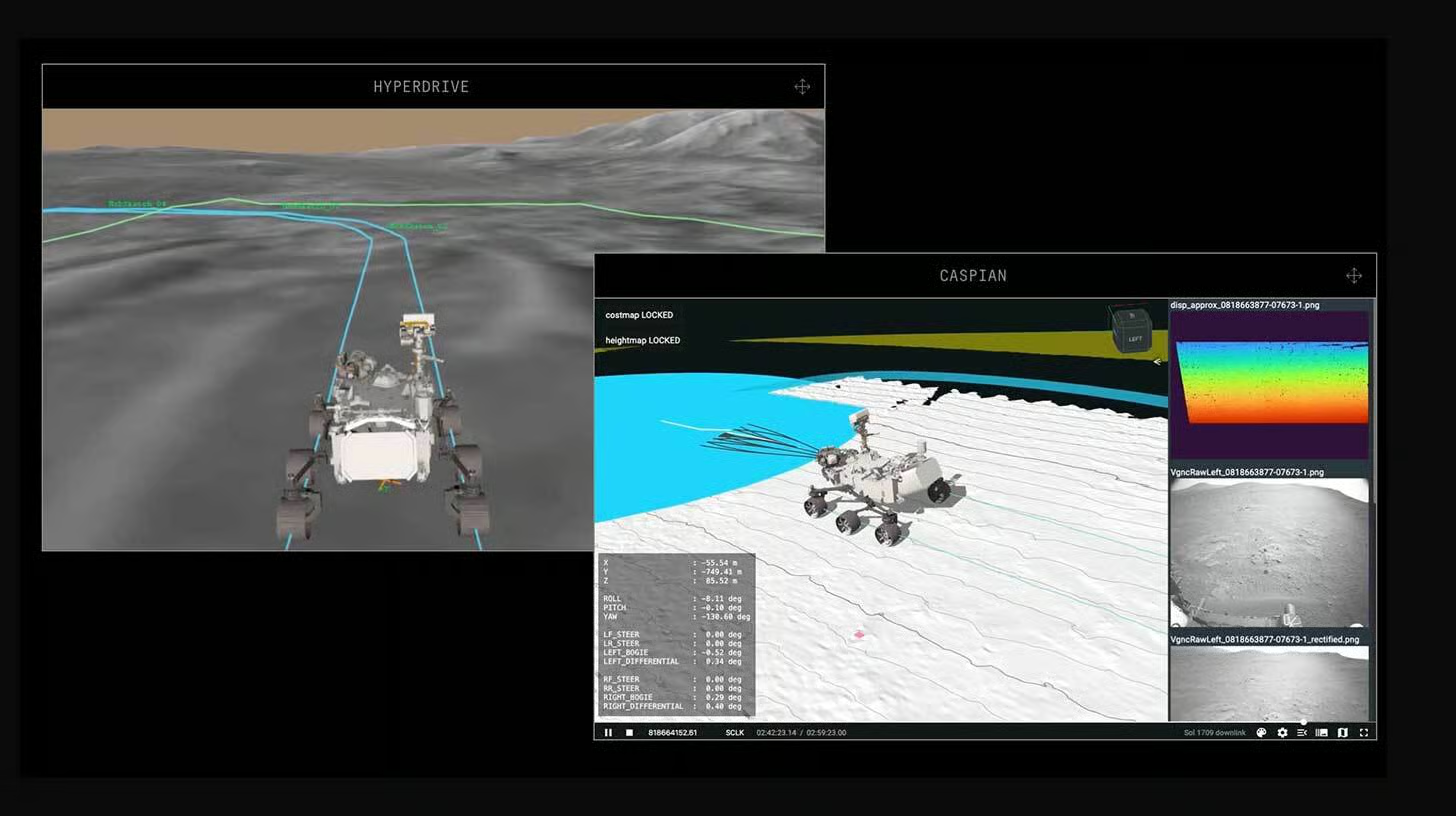
There is now a chatbot driving on Mars. In a historic first for space exploration, NASA has revealed that its Perseverance rover successfully navigated the Martian surface using a route planned entirely by Anthropic’s Claude.
Here is how the AI took the wheel:
- The Mission: In December 2025, engineers tasked Claude Code with mapping a 400-meter route across the rocky Jezero Crater.
- The Process: Claude analyzed years of rover driving data and fresh orbital imagery. It identified hazards like sand ripples and boulder fields, then wrote the specific navigation commands (waypoints) for the rover to follow.
- The Result: The route was verified in a simulation and sent to Mars. Perseverance executed the drive almost perfectly, requiring only minor human tweaks.
- Efficiency: NASA engineers report that AI-assisted planning cuts the time required to map drives by 50%. This frees up human operators to focus on science (analyzing rocks) rather than logistics (dodging rocks).
Why it matters: This is the ultimate “edge case” test. If a Large Language Model can successfully navigate a nuclear-powered robot on another planet—where a single mistake costs billions of dollars—it proves these models have graduated from “text generators” to “spatial reasoners.” It’s a huge leap toward fully autonomous exploration of the solar system.
UrviumAI Take: The “spatial reasoning” is the breakthrough. This tech will come back to Earth. Expect “AI Pathfinding” to hit consumer drones and delivery robots next year. If Claude can dodge Martian sand traps, it can definitely help a delivery bot dodge a pedestrian on a sidewalk.
Last AI News: Apple’s $2B Q.ai Deal, Aronofsky’s AI Series & xAI’s $4.20 Video Model

Jigar Chaudhary is the Editor-in-Chief at UrviumAI, where he oversees coverage of artificial intelligence news, tools, and in-depth studies. With over 5 years of experience analyzing AI and robotics, he focuses on maintaining high editorial standards, accurate reporting, and clear explanations to help readers understand how AI is shaping the future.

Pingback: Sam Altman's AI Successor, RentAHuman.ai Goes Viral, Fitbit Founders' New App