
Perplexity Launches “Model Council” for Multi-AI Answers ⚖️
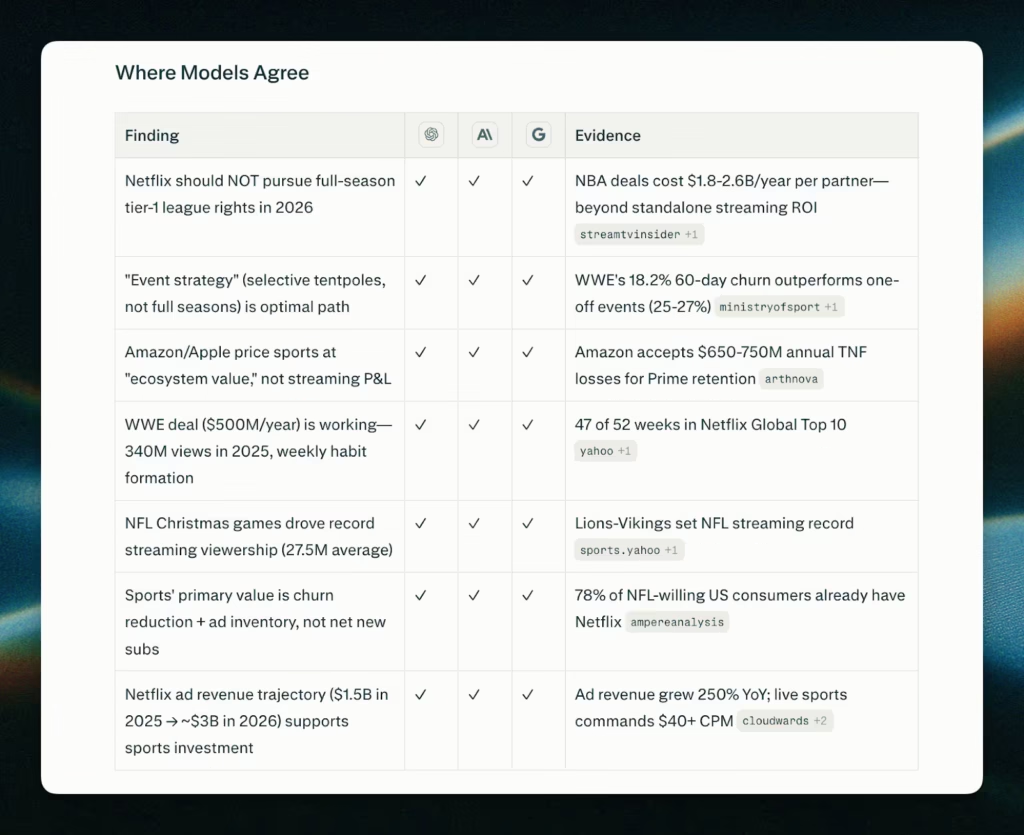
Why trust one AI when you can ask three? Perplexity has launched “Model Council,” a powerful new feature that turns research into a consensus-building exercise. Instead of relying on a single model’s bias, Max subscribers can now run a query through the industry’s top minds simultaneously.
Here is how the Council works:
- The Trio: A single query is sent to Claude Opus 4.6, GPT-5.2, and Gemini 3.0 at the same time.
- The Synthesis: A separate “synthesizer model” reads all three outputs, identifies conflicts, and merges them into a single, comprehensive answer that highlights where the models agree and disagree.
- The Use Case: This is designed for high-stakes decisions—like financial research or medical queries—where a single hallucination could be costly. It effectively automates the process of “double-checking” your AI.
Why it matters: As models become more specialized (some better at code, others at creative writing), “Model Shopping” has become a chore. Perplexity is positioning itself not just as a search engine, but as an aggregation layer that abstracts away the need to choose which AI to trust.
UrviumAI Take: This is the “Rotten Tomatoes” of AI answers. Use this for political or subjective queries. Seeing how Gemini (Google) differs from GPT (OpenAI) on a controversial topic gives you a much clearer picture of the bias inherent in each system.
Lotus Health Raises $41M for “AI Doctors” 🪷
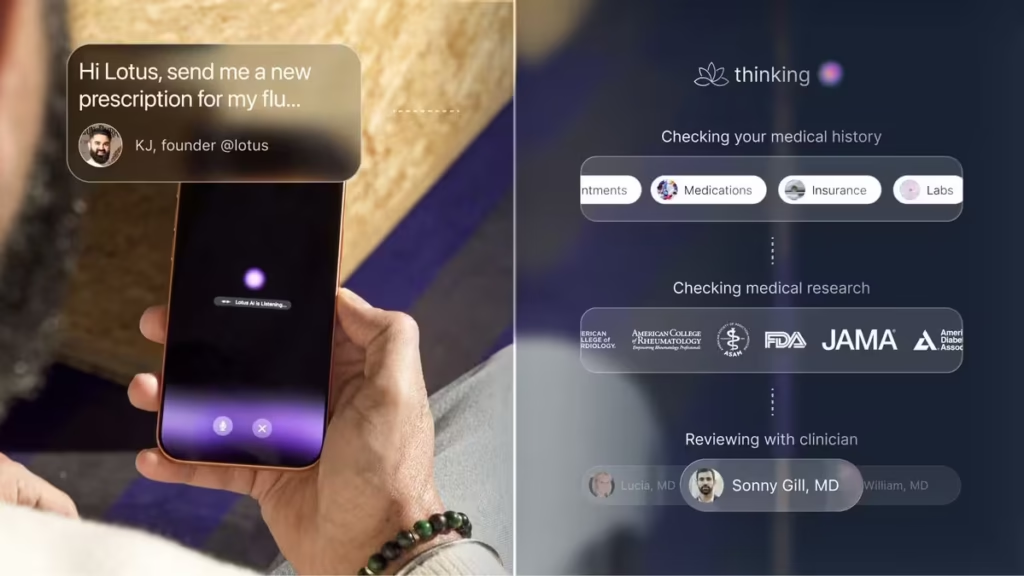
The doctor is in and it’s an AI backed by real pros. A startup called Lotus Health has raised $41 million to fix primary care by making it free, 24/7, and AI-first. The round was led by legendary firms Kleiner Perkins and CRV.
Here is the vision for Lotus:
- The Model: Lotus isn’t just a chatbot giving generic advice. It’s a comprehensive medical practice. The AI collects symptoms and history, and real board-certified physicians review the data to issue diagnoses, referrals, and prescriptions.
- The Success Stories: Founder KJ Dhaliwal shared the story of “Nancy,” who was misdiagnosed with Lupus for 35 years. Lotus’s AI unified her records, flagged Mast Cell Activation Syndrome (MCAS), and physicians confirmed it—solving decades of pain in days.
- The Mission: “Health care, not just sick care.” The goal is to catch issues early using continuous AI monitoring rather than waiting for patients to get ill enough to visit a clinic.
Why it matters: Healthcare is the ultimate high-stakes test for AI. Lotus is betting that a “Human-in-the-Loop” model—where AI does the detective work and humans sign the scripts—can scale world-class diagnostics to millions of people who currently lack access to a primary care doctor.
UrviumAI Take: The “Unified Records” is the killer feature. Most diagnostic errors happen because doctors don’t have the full picture. An AI that can read every PDF and lab result from your last 10 years will spot patterns that a busy human doctor simply doesn’t have time to find.
OpenAI’s GPT-5.3-Codex Builds Itself 🚀
OpenAI’s new model helped write its own code. In a meta twist for the AI industry, OpenAI has released GPT-5.3-Codex, a new flagship coding model that is not only faster and smarter but was actually used to help build and deploy itself.
Here are the specs of the new builder:
- Self-Improvement: OpenAI revealed that early versions of 5.3-Codex were used to find bugs in its own training runs and manage the rollout process, signaling the start of recursive AI improvement.
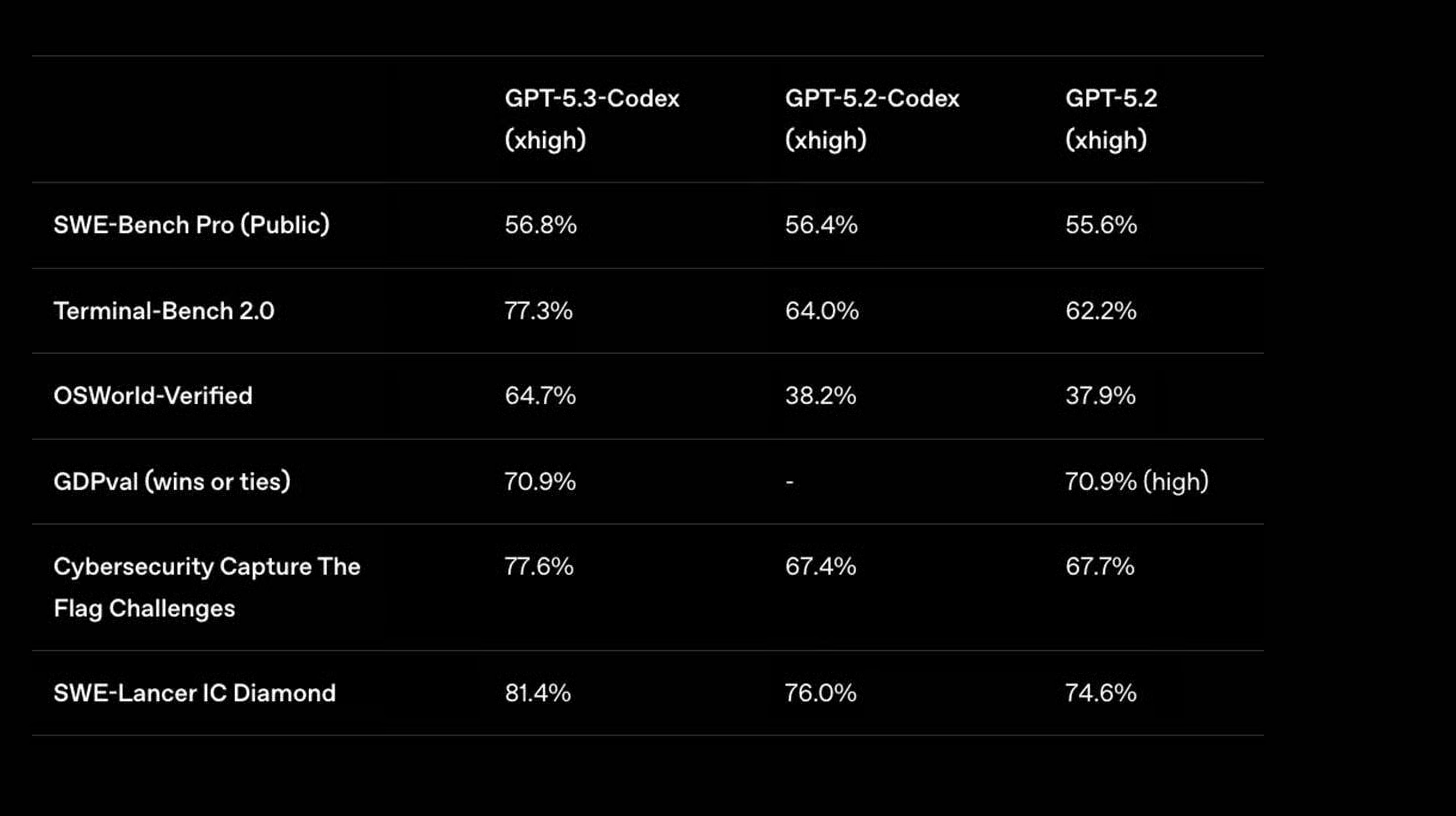
- Benchmark King: The model crushed the SWE-Bench Pro and Terminal-Bench 2.0 leaderboards, outperforming Anthropic’s Opus 4.6 by 12% on key tasks just minutes after release.
- Computer Control: On OSWorld, which tests an AI’s ability to control a desktop computer, it scored 64.7%, nearly doubling the performance of the previous version (38.2%).
- Security: This is the first model OpenAI has rated as “High” risk for cybersecurity capabilities, prompting a $10M donation to defensive security research.
Why it matters: The “Self-Improvement” loop is the Holy Grail of AGI. If an AI can effectively debug and improve its own code, the pace of innovation ceases to be limited by human engineers. GPT-5.3-Codex suggests we are stepping onto that exponential curve right now.
UrviumAI Take: The OSWorld score (64.7%) is the sleeper stat. If this model can control a desktop that well, “RPA” (Robotic Process Automation) is dead. You won’t need complex scripts to automate data entry anymore; you’ll just tell Codex to “open Excel and fix column C.”
Last AI News: Sam Altman’s AI Successor, RentAHuman ai Goes Viral, Fitbit Founders’ New App

Jigar Chaudhary is the Editor-in-Chief at UrviumAI, where he oversees coverage of artificial intelligence news, tools, and in-depth studies. With over 5 years of experience analyzing AI and robotics, he focuses on maintaining high editorial standards, accurate reporting, and clear explanations to help readers understand how AI is shaping the future.


Pingback: Harvard Says AI Increases Work xAI Founders Quit ChatGPT Ads Arrive