
Musk Unveils $25B ‘Terafab’ AI Chip Project 🏭
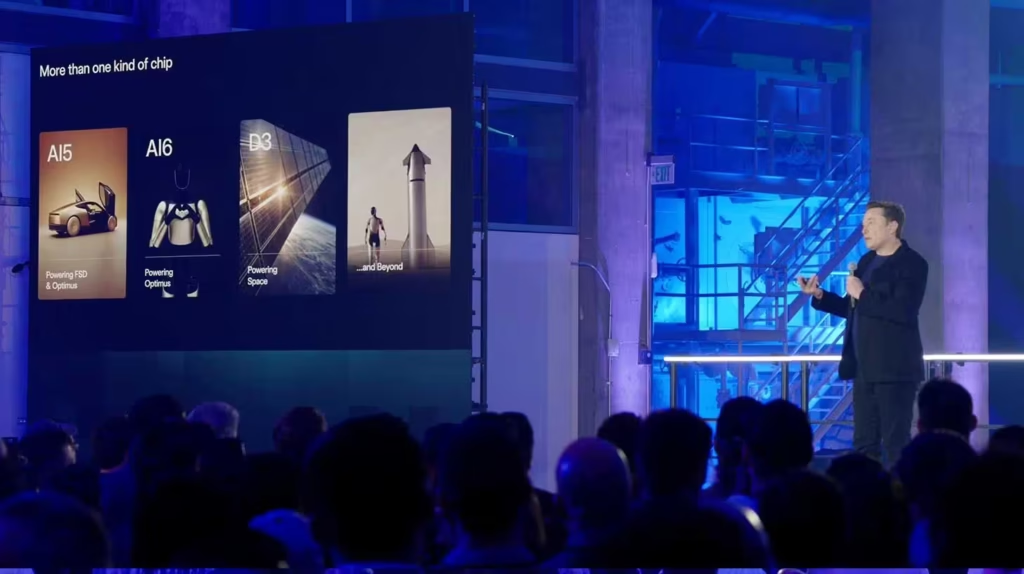
Elon Musk is taking vertical integration to an unprecedented, almost sci-fi level. The billionaire has officially unveiled “Terafab,” a massive new semiconductor manufacturing facility jointly operated by Tesla, SpaceX, and xAI that aims to produce 50 times the world’s current AI computing output.
Here are the staggering details behind the ambitious project:
- Unprecedented Scale: The Austin-based facility is designed to consolidate chip design, lithography, fabrication, memory production, and advanced packaging under one roof, targeting a massive one terawatt of AI compute per year.
- Dual-Market Production: The plant will manufacture two distinct chips: one for terrestrial use in Tesla’s Full Self-Driving and Optimus robots, and a radiation-hardened, space-grade chip.
- Orbital Data Centers: Musk revealed plans to launch millions of solar-powered AI satellites via Starship, arguing that space-based compute will undercut ground costs within 2-3 years because “no one wants AI computing centers in their backyard.”
- The Ultimate Goal: Musk pitched the $25 billion Terafab project as the foundational step toward building a “galactic civilization” and a post-scarcity economy of abundance.
Why it matters: Building a cutting-edge semiconductor fabrication plant from scratch is notoriously difficult and massively expensive, but the global demand for AI compute is far outpacing current supply. If Musk can successfully bypass traditional foundries like TSMC to manufacture custom silicon at this scale, he will control the most critical physical bottleneck of the AI era, giving his companies an insurmountable hardware advantage.
UrviumAI Take: Hardware independence is the ultimate corporate moat. While you may not be building a $25 billion chip factory, the lesson here is supply chain sovereignty. If your business relies entirely on third-party infrastructure for critical AI compute, you are vulnerable to global shortages. Start exploring edge-computing solutions and diversifying your hardware providers today so you aren’t left waiting in line when the big tech giants buy up all the server space.
Halter’s AI ‘Cowgorithm’ Nears $2B Valuation 🐄
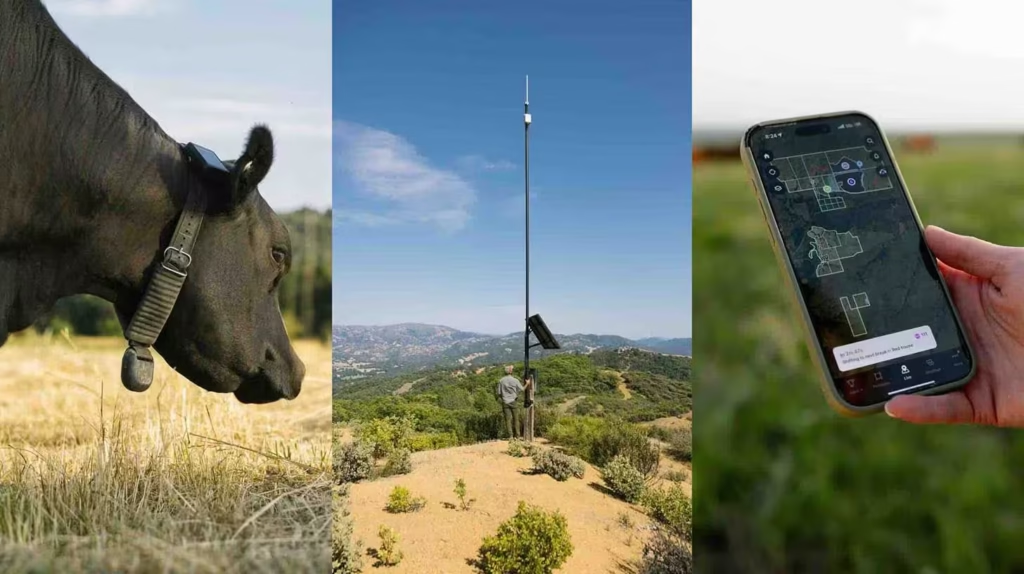
Artificial intelligence is quietly revolutionizing some of the world’s oldest industries. New Zealand agtech startup Halter is reportedly nearing a massive new funding round led by Peter Thiel’s Founders Fund that would value the company at $2 billion.
Here is how the startup is bringing the dairy and beef industries into the digital age:
- Virtual Fencing: Halter equips cattle with solar-powered smart collars that allow ranchers to create virtual pasture boundaries via a mobile app, keeping cows contained without physical fences.
- The “Cowgorithm”: The collars send over 6,000 data points per minute to Halter’s proprietary AI system, which tracks animal health, optimizes grazing patterns, and detects illness early.
- Remote Herding: Farmers can move entire herds of cattle remotely; the AI sends precise vibration and audio cues to the collars, guiding the animals to milking sheds or new pastures automatically.
- Explosive Growth: The new funding round would double Halter’s valuation from just nine months ago, driven by immense investor demand and the collection of over 7 billion hours of animal behavior data.
Why it matters: While Silicon Valley focuses on chatbots, Halter is proving that applying AI to the physical world can unlock massive economic value. By digitizing a process that hasn’t fundamentally changed in centuries, Halter is saving farmers hundreds of millions in fencing costs, reducing intense manual labor, and drastically improving livestock health—showing that “boring” legacy industries are ripe for billion-dollar AI disruption.
UrviumAI Take: The biggest AI unicorns won’t be building chatbots; they will be digitizing the physical world. If you are an entrepreneur or investor, stop looking at crowded software markets. Look for massive, analog industries—like agriculture, construction, or logistics—that still rely on manual labor and physical infrastructure. Applying AI hardware and predictive algorithms to these “old-school” sectors is where the next wave of multi-billion-dollar valuations will happen.
Anthropic Rolls Out Projects in Claude Cowork 📁
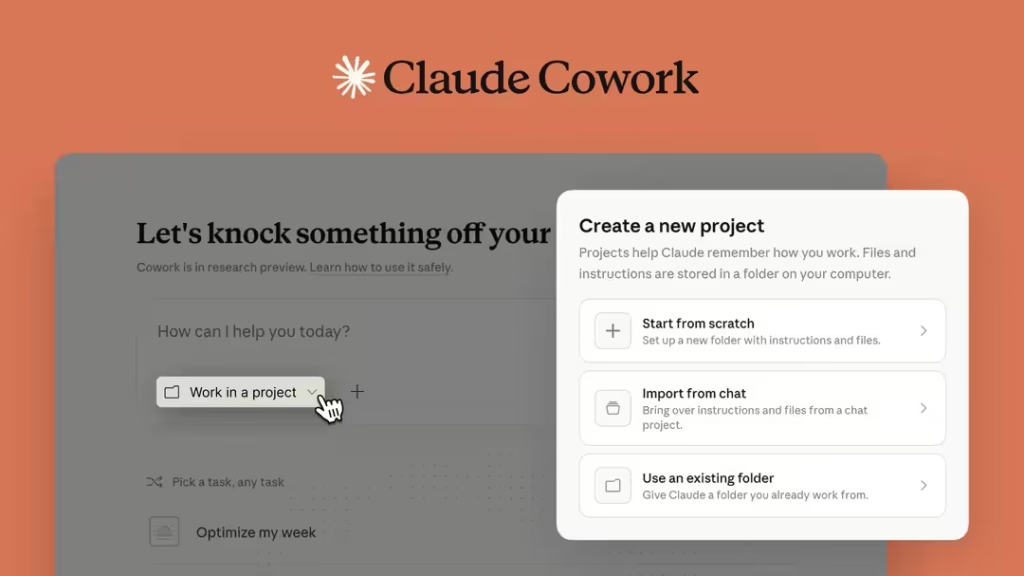
The battle to become the ultimate AI desktop assistant is intensifying. Anthropic has officially rolled out the “Projects” feature within its Claude Cowork desktop application, significantly upgrading how professionals manage complex, long-running tasks.
Here is how the new feature elevates the desktop AI experience:
- Persistent Workspaces: Users can now organize related tasks into dedicated, persistent project folders. Files, links, custom instructions, and AI memory all stay neatly contained within that specific workspace.
- Local Context: Because Claude Cowork operates directly on the user’s desktop, the AI can read, synthesize, and edit local files and applications without uploading everything to a public cloud chat window.
- Easy Migration: The update allows users to import their existing web-based Claude projects directly into the desktop app with a single click, or start entirely fresh.
- Long-Running Tasks: By keeping the context anchored in a specific project, Claude can work autonomously on complex, multi-step tasks (like data extraction or report writing) over extended periods without losing the thread.
Why it matters: Anthropic is aggressively positioning Claude Cowork not just as a chatbot, but as a localized digital employee. By adding the Projects layer, they are giving the AI the necessary scaffolding to handle repeatable, high-effort enterprise workflows—moving from one-off questions to persistent, ongoing collaboration right where the user’s actual files live.
UrviumAI Take: Context isolation is the key to effective AI agents. If you are using AI for work, stop dumping completely unrelated tasks into the same massive chat thread. Start utilizing features like Claude Projects to build dedicated, isolated workspaces for specific clients or departments. Giving the AI a strict, narrow set of customized instructions and files for one specific task will drastically reduce hallucinations and improve output quality.
Last AI News: OpenAI’s Desktop Superapp, MAI-Image-2 Climbs Ranks & Supermicro Arrest
Other AI News Today:
- The White House released a comprehensive national AI legislative framework aiming to establish federal oversight, protect children, and preempt state-level AI laws.
- Cursor’s Aman Sanger confirmed that its new Composer 2 model is built on top of Moonshot AI’s Kimi k2.5, following community backlash over the omission.
- OpenAI reportedly plans to nearly double its workforce from 4,500 to 8,000 by the end of 2026, ramping up recruitment for enterprise and product development.
- A North Carolina man pleaded guilty to wire fraud after using AI to generate thousands of songs and using bots to stream them, stealing $8M in royalties.
- MIT researchers developed Wave-Former and RISE, AI-powered systems that use Wi-Fi-like signals to “see” hidden objects and map indoor spaces while protecting privacy.

Jigar Chaudhary is the Editor-in-Chief at UrviumAI, where he oversees coverage of artificial intelligence news, tools, and in-depth studies. With over 5 years of experience analyzing AI and robotics, he focuses on maintaining high editorial standards, accurate reporting, and clear explanations to help readers understand how AI is shaping the future.

Pingback: Zuckerberg's CEO Agent, Claude Desktop Control & OpenAI's PE Pitch