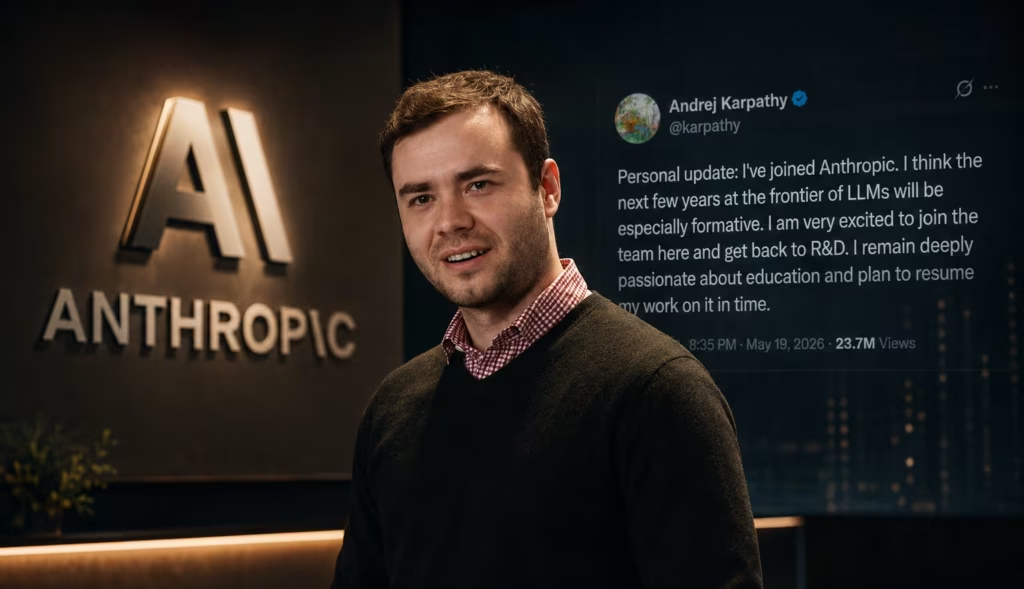
Anthropic Angers Devs With New Agent Credit Split
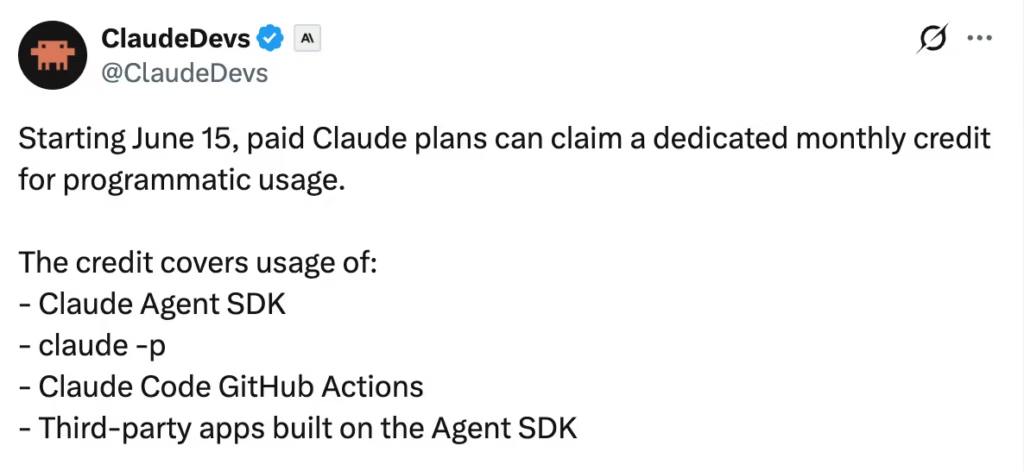
Anthropic is facing a massive backlash from its most vocal power users after changing how it bills for autonomous AI agents. The company announced a new policy that restricts programmatic agent usage to a strict, non-rolling monthly credit limit.
- Starting June 15, third-party agent tools using the Agent SDK will no longer draw from the standard, high-capacity Claude subscription limits.
- Instead, users will receive a dedicated monthly credit pool for agentic tasks: $20 for Pro users, $100 for Max 5x, and $200 for Max 20x.
- While this reverses the company’s April ban on third-party tools like OpenClaw, it effectively eliminates the massive compute subsidy that allowed developers to run agents for hours at a fraction of the API cost.
- The developer community is furious, with prominent figures like T3 founder Theo Browne publicly criticizing the move as a 40x reduction in value, leading many to cancel their subscriptions.
Why it matters: Autonomous agents require an immense amount of computing power to operate continuously. By separating agent billing from interactive chat, Anthropic is trying to protect its profit margins from being drained by inefficient third-party code. However, alienating the developer community right as OpenAI expands its Codex capabilities is a dangerous strategic gamble that could push power users directly to competitors.
UrviumAI Suggestion: The economics of the AI subscription model are fundamentally breaking. If you rely heavily on third-party AI agents for your engineering workflows, do not assume your flat-rate subscription will last forever. Generative AI companies cannot afford to subsidize unlimited autonomous compute. You must start tracking your agent’s API token consumption meticulously, optimizing your scripts to be as efficient as possible, because strict, usage-based billing is rapidly becoming the industry standard.
OpenAI’s Codex Moves Beyond the Desktop
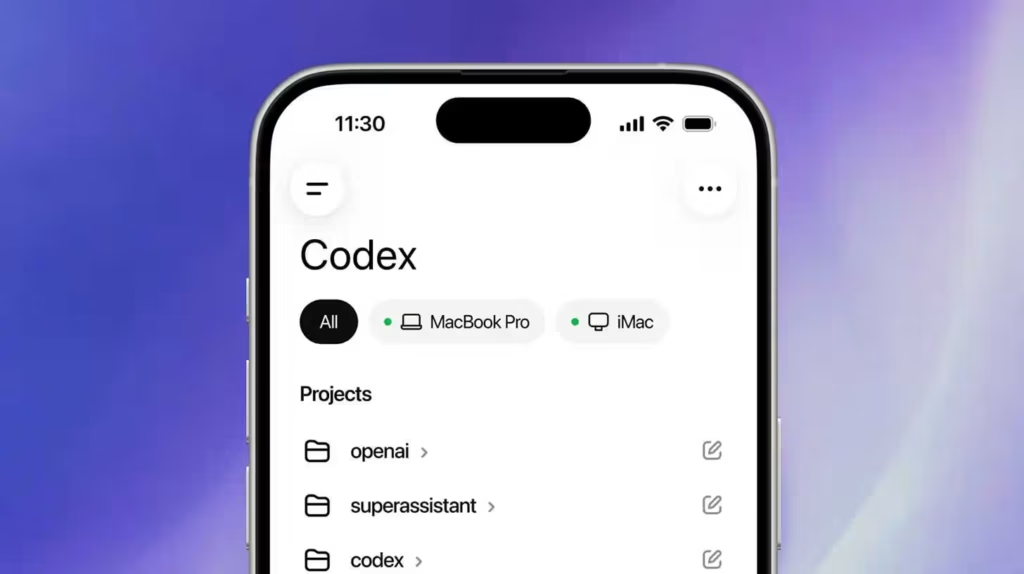
The tether between software developers and their laptops is finally being severed. OpenAI has rolled out a mobile preview of its powerful Codex tool inside the ChatGPT iOS app, fundamentally changing how engineers manage autonomous coding workflows.
- Codex continues to execute its heavy processing on a laptop or remote host, but users can now securely monitor and direct the work directly from their smartphones.
- The mobile interface displays the live state of connected machines, allowing developers to review code diffs, approve terminal commands, and start entirely new threads on the go.
- To ensure enterprise-grade security, the system utilizes a “secure relay layer” that keeps trusted machines reachable across devices without ever exposing them directly to the public internet.
- In its announcement, OpenAI took a subtle jab at Anthropic’s mobile efforts, noting that Codex offers “more than the ability to remotely control a single task.”
Why it matters: As AI coding agents evolve from simple autocomplete tools into autonomous workers capable of refactoring entire codebases over several hours, developers cannot be expected to sit and watch a progress bar. By bringing Codex to mobile, OpenAI is transforming the smartphone into a secure, remote command center, allowing engineers to authorize actions and supervise long-running tasks while away from their desks.
UrviumAI Suggestion: Mobile orchestration is the next phase of developer productivity. Take advantage of this untethered workflow immediately. If you are running massive, multi-hour code refactoring jobs or testing suites, use the Codex mobile app to approve permissions and review diffs during your commute or while stepping away from the office. Managing asynchronous digital workers via a secure mobile relay keeps your projects moving 24/7 without forcing you to be chained to a monitor.
OpenAI, Apple’s ‘Deteriorating’ Relationship

One of the highest-profile partnerships in the tech industry appears to be collapsing into a bitter legal dispute. OpenAI is reportedly considering taking legal action against Apple over their 2024 ChatGPT-Siri integration deal.
- OpenAI has retained external legal counsel to explore options, which may include serving Apple with a formal breach-of-contract notice regarding the “deteriorating” partnership.
- The original 2024 deal integrated ChatGPT into Siri, which OpenAI projected would drive billions in premium subscriptions. However, the integration severely underperformed, with internal data showing users vastly prefer the standalone ChatGPT app over Apple’s constrained, windowed responses.
- Tensions are escalating as Apple plans to open iOS 27 to competing models like Google Gemini and Anthropic’s Claude at the upcoming WWDC on June 8.
- The relationship is further strained by OpenAI’s aggressive recruitment of Apple hardware engineers and its $6.5 billion acquisition of Jony Ive’s hardware startup, positioning OpenAI as a direct hardware rival.
Why it matters: This massive rift proves that tech giants are struggling to share the artificial intelligence spotlight. Apple wants the intelligence of ChatGPT without giving up control of its ecosystem, while OpenAI wants direct access to a billion iPhone users without its brand being diluted. If this partnership officially shatters, it sets the stage for a brutal hardware war, especially with rumors swirling that OpenAI is fast-tracking its own AI-native smartphone for 2027.
UrviumAI Suggestion: Ecosystem control is the ultimate battleground. Pay close attention to how this conflict reshapes the mobile landscape. If OpenAI pulls away from Apple and launches its own hardware, the smartphone market will face its biggest disruption in a decade. If your business develops consumer mobile applications, you must prepare for a fragmented future where you may need to build experiences not just for iOS and Android, but for a wholly new, AI-native operating system run entirely by OpenAI.
Last AI News: Anthropic’s Enterprise Lead, OpenAI’s Global Watchdog & Claude Recovers Bitcoin
Other AI News Today:
- A new UK study reveals that one in seven people are using AI chatbots for medical advice instead of visiting a GP, raising serious concerns among doctors.
- xAI launched Grok Build, an agentic CLI for SuperGrok Heavy subscribers featuring parallel subagents and automated code refactoring.
- Bumble is abandoning its iconic swipe feature in a major overhaul, replacing it with an AI assistant named ‘Bee’ to focus on intentional dating.
- Higgsfield AI released “Supercomputer,” a multi-model cloud agent that automates end-to-end creative marketing campaigns across multiple AI ecosystems.
- Runway introduced “Agent,” a conversational AI creative partner that ideates, executes, sound-designs, and edits full video projects.

Jigar Chaudhary is the Editor-in-Chief at UrviumAI, where he oversees coverage of artificial intelligence news, tools, and in-depth studies. With over 5 years of experience analyzing AI and robotics, he focuses on maintaining high editorial standards, accurate reporting, and clear explanations to help readers understand how AI is shaping the future.