Amazon Brings Alexa+ to the Web 🌐
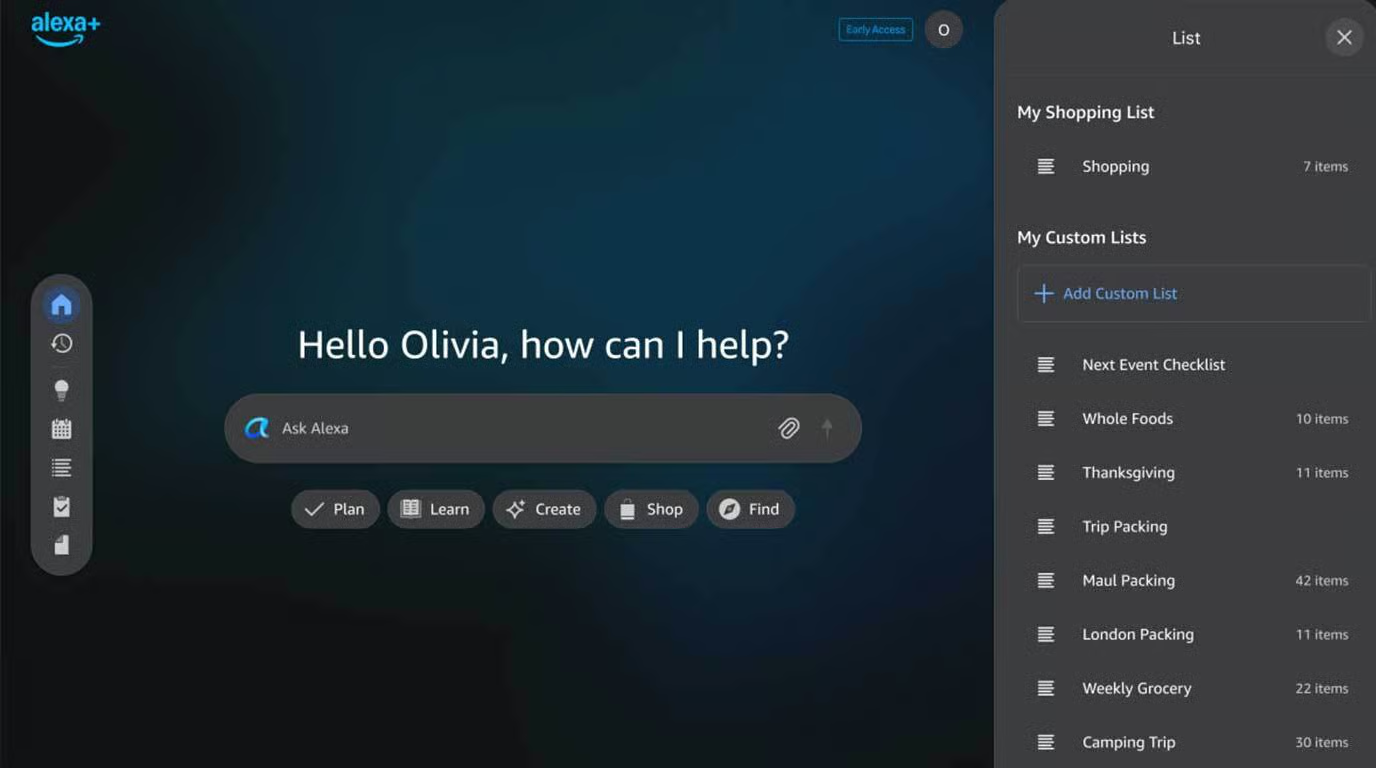
Alexa just broke out of the smart speaker! At CES 2026, Amazon unveiled Alexa.com, a new browser-based interface that finally brings its upgraded Alexa+ assistant to the web. This move positions Alexa directly against chatbots like ChatGPT and Gemini, transforming it from a voice-only tool into a full visual workspace.
Here is what the new web experience offers:
- Beyond the Echo: For the first time, Early Access users can type to Alexa+ in a browser for research, planning, and writing tasks.
- New “Agent” Powers: Alexa+ isn’t just for checking the weather. New integrations with Expedia, Yelp, Angi, and Square allow it to book travel, find plumbers, and make restaurant reservations autonomously.
- Surging Engagement: Amazon reports that users are shopping and cooking with the new Alexa+ at 3-5x higher rates than before, proving the “smarter” AI is resonating.
- App Redesign: The mobile Alexa app is also getting a total overhaul to prioritize “chat-first” interactions, moving away from the old menu-heavy design.
Why it matters: Amazon is finally playing offense. By expanding Alexa+ to the web, they are leveraging their massive install base to compete for the “AI Assistant” crown. While they are betting big on Anthropic’s Claude for the backend, this frontend push ensures Alexa remains the primary interface for millions of households.
UrviumAI Take: Moving Alexa to the web is a survival strategy. But If you have access to Alexa.com, test its “shopping agent” capabilities against ChatGPT. Amazon’s massive advantage is that it already has your credit card and shipping address stored—making the “buy” action frictionless compared to other bots.
Nvidia’s Open-Source AI for Self-Driving Cars 🚗

Nvidia just gave the keys to self-driving cars to everyone! At CES 2026, Nvidia unveiled Alpamayo, a groundbreaking family of open-source AI models designed to solve the hardest problem in autonomous driving: thinking like a human.
Here is why Alpamayo is a “ChatGPT moment” for cars:
- Reasoning on the Road: The flagship Alpamayo 1 is a 10-billion parameter model that uses “chain-of-thought” reasoning. It doesn’t just drive; it explains why it made a decision (e.g., “I am slowing down because the cyclist looks unstable”).
- Open Access: Nvidia is releasing the model weights, the AlpaSim simulation framework, and over 1,700 hours of real-world driving data to the public.
- Solving the “Long Tail”: Traditional self-driving systems fail in weird, rare scenarios. Alpamayo is designed to “reason” through these edge cases step-by-step, making it far safer than black-box systems.
- Jensen’s Vision: CEO Jensen Huang called this the moment when “machines begin to reason and act in the real world,” democratizing the tech that companies like Waymo spent billions building.
Why it matters: Before today, only giants like Tesla and Waymo had the data to build true autonomy. Nvidia just leveled the playing field. By open-sourcing a reasoning brain for cars, Nvidia ensures that every other automaker stays dependent on Nvidia’s chips to run this powerful new software.
UrviumAI Take: “Explainability” is the holy grail for regulators. If you follow AV tech, look for the “reasoning traces” feature in Alpamayo. Being able to read why the car decided to turn left is what will finally convince governments to legalize fully autonomous vehicles on a mass scale.
40M+ People Use ChatGPT Daily for Health Advice 🏥
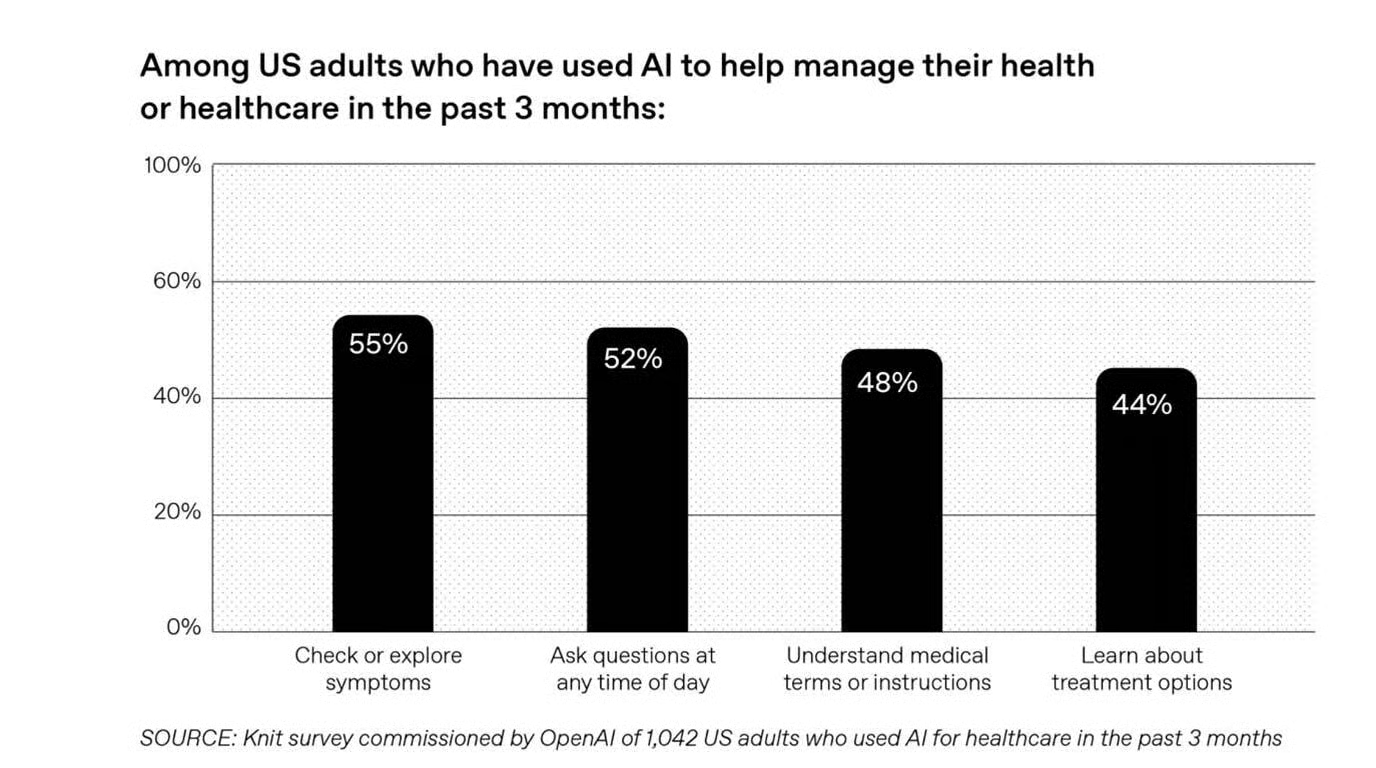
Dr. ChatGPT is seeing patients now. OpenAI just released a fascinating report revealing that over 40 million people turn to ChatGPT for health information every single day. That means roughly 5% of all messages sent to the AI are now related to medical topics.
The data reveals a critical gap in the healthcare system:
- The “Hospital Desert” Lifeline: Around 600,000 weekly messages come from rural areas classified as “hospital deserts,” where real doctors are miles away.
- After-Hours Care: 70% of health-related chats happen outside of normal clinic hours (evenings and weekends), proving AI is filling the void when doctors aren’t available.
- Bureaucracy Buster: It’s not just symptoms. Users send nearly 2 million questions a week about health insurance, using the AI to decode confusing bills, compare plans, and write appeal letters for denied claims.
- Policy Push: OpenAI used this report to urge the FDA to create clearer pathways for AI medical devices, hinting that they want to make these “digital doctor” capabilities official.
Why it matters: This report confirms that for millions of people, AI is already the first line of defense for their health. While it poses risks, the massive usage shows that the traditional healthcare system is too slow, too expensive, or too confusing for modern needs—and AI is the only tool scaling fast enough to help.
UrviumAI Take: The “Insurance appeals” use case is the most underrated power of AI. Now, if you ever get a surprise medical bill, upload the anonymized bill and your policy to ChatGPT. Ask it to “find errors and draft an appeal letter citing specific billing codes.” It is surprisingly effective at fighting bureaucracy.
Last AI News: LeCun Quits Meta, Grok Image Scandal, and Claude Code Shocks Google

Jigar Chaudhary is the Editor-in-Chief at UrviumAI, where he oversees coverage of artificial intelligence news, tools, and in-depth studies. With over 5 years of experience analyzing AI and robotics, he focuses on maintaining high editorial standards, accurate reporting, and clear explanations to help readers understand how AI is shaping the future.