
Nvidia Unveils NemoClaw and Vera Rubin at GTC 2026 🖥️
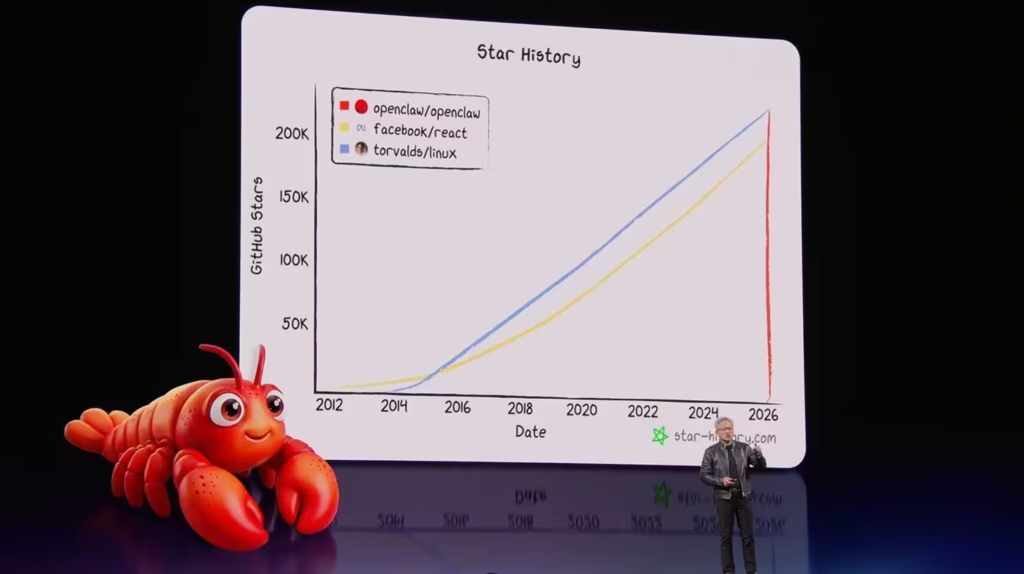
NVIDIA is making a massive play to dominate the agentic AI era. At GTC 2026, CEO Jensen Huang made a wave of announcements, fundamentally shifting the company from just a hardware chipmaker to a vertically integrated AI infrastructure giant.
Here are the key announcements from the GTC keynote:
- NemoClaw: A new software stack that brings enterprise-grade security and privacy guardrails to OpenClaw agents, ensuring they don’t leak sensitive corporate data.
- Vera Rubin Platform: Nvidia’s next-generation computing platform featuring seven new chips designed specifically to power AI training and massive agentic workloads.
- DLSS 5: A revolutionary graphics update that uses AI to add photorealistic lighting and materials to games in real-time, already backed by major studios like Bethesda and Capcom.
- Agent Toolkits: A suite of open-source toolkits allowing enterprises to build secure AI agents for vehicles, robotics, and desktop automation.
Why it matters: Huang pitched Nvidia as “the first vertically integrated but horizontally open company.” By providing the cutting-edge chips, the software guardrails, and the open toolkits, Nvidia is ensuring that no matter who wins the AI agent race, their technology will be running on Nvidia’s underlying infrastructure.
UrviumAI Take: Nvidia is building the operating system for the AI economy, not just the engine. Stop looking at Nvidia purely as a hardware stock or hardware provider. Start paying attention to their software layer (like NemoClaw). If you are building enterprise AI agents, integrating with Nvidia’s security and policy guardrails will likely become the industry standard for safe corporate deployment.
Manus Brings AI Agents Directly to Your Desktop 💻
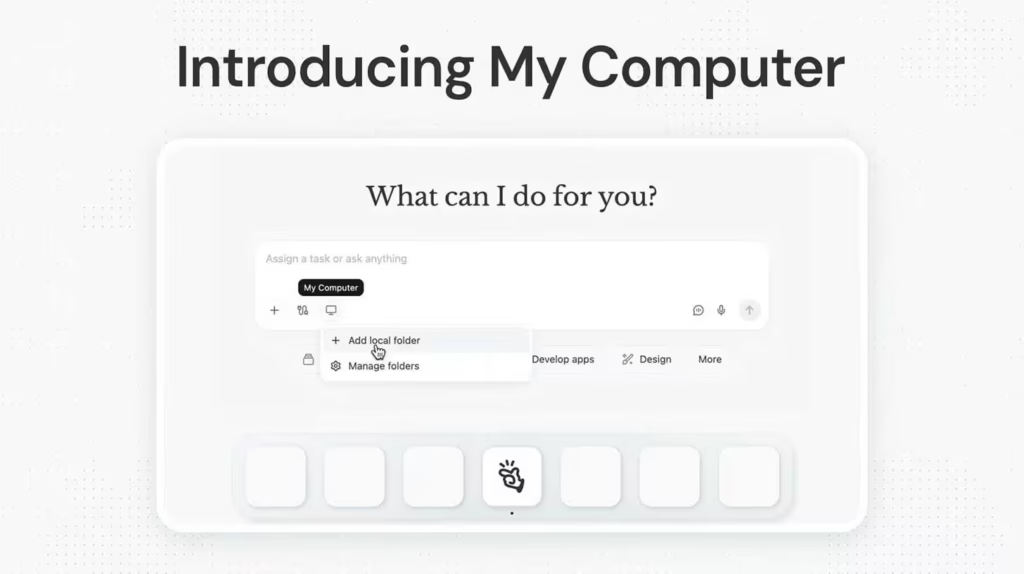
The race to control the desktop environment is heating up. Manus, the highly capable agentic startup recently acquired by Meta for $2 billion, has launched “My Computer,” moving its powerful AI out of the cloud and directly onto users’ local machines.
Here is how the new desktop agent operates:
- Local Control: The app works directly through the local computer terminal, granting the AI read, edit, and execution access to files stored locally on the machine.
- Workflow Automation: Users can instruct the agent to do tedious tasks, such as organizing thousands of unsorted photos into labeled folders or batch-renaming invoices in minutes.
- App Generation: The agent can autonomously write, debug, and package entire applications (like a Mac app built in Swift) without the user ever opening a code editor.
- Idle Hardware Utilization: The agent can tap into a machine’s idle GPU to run background jobs, allowing users to text the agent from their phone and have it complete tasks on their desktop at home.
Why it matters: Manus is transitioning AI from a “chat window” in a browser to a deeply integrated “co-worker” operating your file system. For Meta, this desktop integration is a brilliant strategic move to gain a massive foothold in user orchestration without needing to build a frontier reasoning model from scratch.
UrviumAI Take: Cloud computing is great, but local execution is the future of agentic AI. Get comfortable letting AI access your local terminal. The true unlock for personal productivity won’t be asking a chatbot to write an email; it will be asking a local desktop agent to autonomously sort your downloads folder, rename your tax documents, and execute code while you sleep.
Fake AI Metal Band Becomes a Real-World Phenomenon 🎸
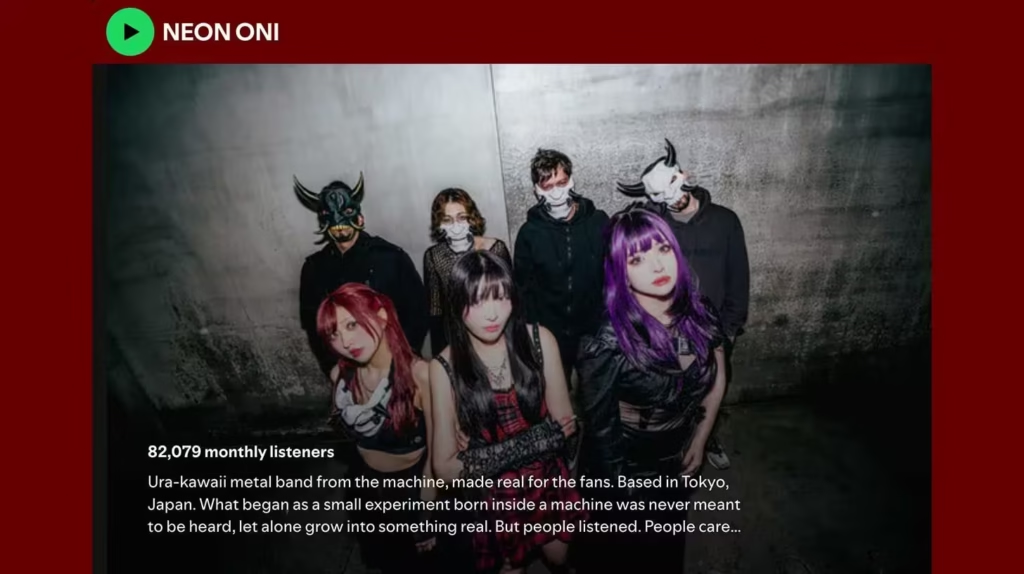
The line between artificial intelligence and human artistry just blurred in an unexpected way. A fictional Japanese metal band entirely generated by AI has successfully transitioned into a real-world touring act after amassing a massive online following.
Here is the timeline of the bizarre musical crossover:
- The Illusion: A pseudonymous producer named “Kage” used AI music generator Suno to create ‘Neon Oni,’ complete with fake member bios, AI-generated music videos, and merchandise.
- The Following: The digitally fabricated band gained serious traction, pulling in over 80,000 monthly listeners on Spotify.
- The Exposure: Reddit sleuths eventually noticed AI anomalies (like distorted hands in videos) and traced the creator back to Europe, exposing the band as a complete fabrication.
- The Pivot: Instead of deleting the project, Kage hired seven real musicians from the Tokyo metal scene to actually learn and perform the AI-generated tracks live for fans.
Why it matters: Initial deception aside, this flips the traditional music industry model on its head. Neon Oni proves that an anonymous creator can use AI to build a brand, test a sound, and attract an audience first, and then hire human musicians to fulfill the physical demand once the concept proves successful.
UrviumAI Take: AI is not the death of the human musician; it is a new prototyping tool for the music industry. If you are an artist or a brand marketer, use AI to rapidly test concepts. You can generate entire albums, storylines, and aesthetics in days to see what the market actually likes, then hire real human talent to bring the most successful ideas to life.
Last AI News: xAI Rebuilds, Meta Plans 20% Layoffs & AI Dog Vaccine
Other AI News Today:
- Encyclopedia Britannica and Merriam-Webster have sued OpenAI, alleging massive copyright infringement, unauthorized data scraping, and brand damage from hallucinations.
- Physical Superintelligence released Get Physics Done (GPD), an open-source AI agent designed to automate rigorous physics research workflows and draft papers.
- Moonshot AI published a new technique called Attention Residuals, improving neural network compute efficiency by 1.25x with minimal latency overhead.
- OpenAI has restructured its Stargate computing team, pivoting away from building its own massive data centers to focus on renting AI servers instead.
- Meta inked a massive $27B, five-year deal with Nebius Group to secure AI cloud infrastructure, including Nvidia’s next-gen Vera Rubin platform.

Jigar Chaudhary is the Editor-in-Chief at UrviumAI, where he oversees coverage of artificial intelligence news, tools, and in-depth studies. With over 5 years of experience analyzing AI and robotics, he focuses on maintaining high editorial standards, accurate reporting, and clear explanations to help readers understand how AI is shaping the future.
Pingback: OpenAI's Strategic Pivot, GPT-5.4 Mini & Mistral Forge